


Wages Are Winning: How Paychecks Are Easing Pressure on US Homebuyers

Wages are finally catching up — what that means for the real estate USA market
A surprising shift in the real estate USA market is giving would-be buyers a break: wages grew faster than home prices in a majority of counties between Q1 2025 and Q1 2026. That change does not erase high housing costs, but it does change the arithmetic of buying a home in many parts of the country.
In this report we unpack the latest ATTOM data, put the numbers beside market realities in the five most populous counties where paychecks outpaced housing, and explain what buyers and investors should do next. We accept the good news, question its limits, and outline practical steps for people making real estate decisions now.
What the ATTOM data shows: a clearer picture on affordability
ATTOM analyzed 580 U.S. counties and found that between the first quarter of 2025 and the first quarter of 2026, typical wages grew faster than home prices in 64% (374) of those counties. At the national level, the median home price rose 8% from $333,438 to $360,000 since Q1 2024, but that headline masks wide regional differences.
Key takeaways from the dataset:
- 374 of 580 counties (64%) saw wage growth exceed home-price growth year over year.
- Average weekly wages increased 6.4%, per the Bureau of Labor Statistics data running through Q3 2025.
- Wage gains are helping buyers build down payments and improve their debt-to-income ratios, improving mortgage qualification chances even if mortgage rates remain elevated.
Rob Barber, CEO of ATTOM, summed it up: wage growth exceeding home-price growth in a majority of markets is a positive signal for affordability, though homeownership costs remain elevated in many areas. Realtor.com economist Jiayi Xu notes that this trend is “a powerful tool for potential buyers,” because extra income acts as an accelerator for savings and DTI flexibility.
Deep dive: the five most populous counties where pay outpaced prices
The most populous counties that reported wages rising faster than housing prices were Los Angeles County (CA), Cook County (IL), Harris County (TX), San Diego County (CA), and Maricopa County (AZ). Below are the precise numbers and what they imply for buyers in each region.
Los Angeles County
- Median home price Q1 2026: $879,000 (down 1.5% year over year)
- Wage growth: +3.0%
- Share of annualized wages needed to buy median home: 66%
Los Angeles is a textbook case of high absolute prices meeting modest wage gains. Even with wage growth outpacing falling prices, the median-priced home still consumes a large share of annualized wages. Local agents say well-priced, move-in-ready properties sell quickly, and bargains are rare. Our view: higher paychecks help buyers qualify and save, but they do not make typical Los Angeles housing affordable for most single-income households.
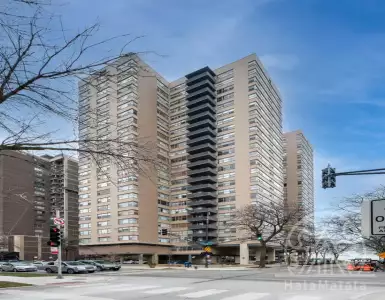
Cook County (Chicago metropolitan area)
- Median home price Q1 2026: $305,000 (+2.7% year over year)
- Wage growth: +4.6%
Chicago’s market shows stronger wage dynamics relative to home-price growth, and brokers report renewed activity downtown and in the suburbs. The inventory squeeze and incoming movers from other states have driven competition for entry-level homes. For investors, rising wages and tightening supply can translate into stronger rents and faster capital appreciation at the right price points.
Harris County (Houston)
- Median home price Q1 2026: $293,750 (down 3.7%)
- Wage growth: +3.3%
Houston’s job market remains robust and diverse, supporting wage gains even as prices tick downward. That dynamic helps potential buyers who were priced out in recent years; more income with slightly cheaper prices means the effective purchasing power of local workers has improved.
San Diego County
- Median home price Q1 2026: $875,250 (down 1.7%)
- Wage growth: +3.9%
San Diego combines defense, biotech, and tech employment that lifts wages. The high starting point for prices keeps affordability stretched, but wage growth gives buyers better DTI cushions and negotiation leverage, especially on properties that need work or are priced below replacement cost.
Maricopa County (Phoenix metro area)
- Median home price Q1 2026: $460,000 (down 2.9%)
- Wage growth: +4.5%
Phoenix has been a job-growth hub, attracting tech firms and distribution centers. Wages rising faster than prices in Maricopa County has a real effect: buyers can accumulate down payments faster, compete in bidding situations, and qualify under lender DTI thresholds with less stress.
Why wages are rising in these places: universities, industries, and talent migration
Jiayi Xu points to higher education institutions as a recurring factor.







Specific economic anchors include:
- Los Angeles: entertainment, aerospace, private spaceflight, advanced manufacturing
- Cook County: finance, education, healthcare, corporate headquarters
- Harris County: energy, logistics, healthcare, aerospace
- San Diego: biotech, defense, research labs
- Maricopa County: tech, logistics, corporate relocations, regional headquarters
These industries lift average wages and create a steady demand for housing at different price tiers. From an investment standpoint, markets with diversified high-wage employers are less dependent on a single sector, which reduces cyclical exposure.
What rising wages actually mean for buyers and investors (practical insights)
We focus on five concrete effects that rising wages produce for people in the market.
- Accelerated down payment savings: higher take-home pay lets households stash more into savings accounts or liquid investments, shortening time to a conventional 20% down payment.
- Better debt-to-income ratios: lenders look at DTI when underwriting; stronger wages expand the loan amount a buyer can qualify for without increasing monthly strain.
- Increased bargaining power: buyers with larger down payments or preapproval can negotiate price and terms more credibly; sellers often prefer offers with fewer contingencies.
- Stronger rent fundamentals: in many counties wage growth translates into higher rent-bid power, which benefits buy-to-rent investors focused on cash flow.
- Regional differentiation: a wage-driven affordability improvement in one county does not mean the same in another — absolute price levels still govern affordability.
From our analysis, buyers in mid-priced metros like Phoenix and Houston gain the most straightforward benefit because wage gains meet more modest price baselines. In high-price metros like Los Angeles and San Diego, wage improvements help but do not offset the decades-long run-up in home values.
Risks and caveats: why this is not a broad affordability cure
We welcome the data, but we also see limits and risks that buyers and investors must weigh.
- High absolute price levels remain the main barrier. Even with wages rising faster than prices, places with very high median prices force households into expensive mortgage payments.
- Local inventory constraints can offset wage gains. Tight inventory provokes bidding wars, which pushes final sale prices above median levels and can nullify wage advantages for first-time buyers.
- Mortgage-rate uncertainty remains a wildcard. Although higher wages improve DTI, unchanged or higher mortgage rates will still make monthly payments steeper than in past low-rate years.
- Job concentration risk. Regions that rely heavily on a small cluster of employers or industries are vulnerable to sector downturns that could reverse wage gains and dampen housing demand.
- Geographic inequality. The ATTOM findings are county-level; many smaller or rural counties are not experiencing the same wage-led relief.
We stress that an improvement in affordability metrics is not the same as widespread affordability. The change is meaningful, but targeted rather than universal.
Strategies for buyers and investors right now
If you are house-hunting, investing, or advising clients, here are tactical moves that make sense given rising wages in many counties.
- Prioritize affordability bands: look where wage growth intersects with lower absolute median prices, such as targeted suburbs or secondary cities within the five counties discussed.
- Lock a plan for down-payment savings: with wages rising, increase automatic savings to capture higher preapproval and stronger offers.
- Monitor DTI and credit profile: lenders will reward strong DTI and credit scores; even modest wage gains can be wasted without clean credit and low consumer debt.
- Consider contingent offers carefully: in markets with higher wages and tight supply, non-contingent or shorter contingency windows win deals, but they increase risk—only use them if your finances absorb a double housing cost temporarily.
- For investors, stress-test cash flow: rising wages can boost rents, but run numbers against varied vacancy and cap-rate scenarios.
We recommend buyers build a 12-month affordability plan that covers down payment, closing costs, and a buffer for rate moves. For investors, focus on net yield after capex and conservative vacancy assumptions.
What to watch next: data points that will matter
Keep an eye on these indicators to know whether the wage-led improvement will continue or fade:
- Quarterly wage growth at county and metro levels
- Inventory and months-of-supply metrics
- Local job growth by sector, including tech, healthcare, and logistics
- Mortgage-rate trends and lender underwriting standards
- Migration patterns between states, which can reshape local demand
If wage growth continues to outpace home-price growth in broad areas, affordability will improve incrementally and certain markets will pivot from buyer-leaning to more balanced.
Frequently Asked Questions
Q: Does wage growth mean mortgage rates are less important for buyers?
A: No. Wage growth improves a buyer’s debt-to-income ratio and savings, which helps qualification and down-payment accumulation. Mortgage rates still determine monthly payment size, so rate movements remain central to affordability.
Q: Are all counties improving, or is this concentrated in big metros?
A: The improvement is broad but uneven. ATTOM found wages outpaced prices in 64% (374) of 580 counties. The most populous counties with that pattern include Los Angeles, Cook, Harris, San Diego, and Maricopa, but many smaller counties also showed the same trend.
Q: Should I move to a county where wages are rising faster than prices to buy an affordable home?
A: Migration is a common response, but consider job prospects, lifestyle fit, and the cost of moving. Wage growth improves buying power, but long-term affordability depends on whether local employment remains stable and diversified.
Q: What do rising wages mean for real estate investors?
A: Rising wages can strengthen rent growth and demand for quality rentals. Investors should still underwrite conservatively, account for maintenance and vacancy, and target neighborhoods where income gains translate into sustainable tenant demand.
Bottom line: modest relief, not a reset
The ATTOM data signals a meaningful change: wages outpaced home-price growth in 64% of analyzed counties between Q1 2025 and Q1 2026, and average weekly wages rose 6.4% through Q3 2025. That is real breathing room for buyers — more down-payment capacity, improved DTI, and stronger negotiation positions. Yet high median prices in markets like Los Angeles ($879,000) and San Diego ($875,250) mean affordability remains constrained for many households.
Our assessment: wage gains matter, especially in mid-priced metros such as Maricopa and Harris counties, where the combination of falling or stable prices and rising paychecks materially improves access to homeownership. For prospective buyers, the practical move is clear: convert extra income into savings, clean up credit and DTI profiles, and target neighborhoods where wage growth intersects with reasonable entry prices. For investors, focus on cash-flow resilience rather than chasing headlines.
A specific number to leave you with: in Los Angeles County, despite wage gains, buyers still need to spend 66% of annualized wages to afford the median-priced home — a stark reminder that wage growth helps, but does not erase the affordability gap.
We will find property in USA for you
- 🔸 Reliable new buildings and ready-made apartments
- 🔸 Without commissions and intermediaries
- 🔸 Online display and remote transaction

International Real Estate Consultant

Subscribe to the newsletter from Hatamatata.com!
Subscribe to the newsletter from Hatamatata.com!
Popular Posts

We will find property in USA for you
- 🔸 Reliable new buildings and ready-made apartments
- 🔸 Without commissions and intermediaries
- 🔸 Online display and remote transaction
International Real Estate Consultant

Subscribe to the newsletter from Hatamatata.com!
Subscribe to the newsletter from Hatamatata.com!
I agree to the processing of personal data and confidentiality rules of HatamatataPopular Offers



Need advice on your situation?
Get a free consultation on purchasing real estate overseas. We’ll discuss your goals, suggest the best strategies and countries, and explain how to complete the purchase step by step. You’ll get clear answers to all your questions about buying, investing, and relocating abroad.



Irina Nikolaeva
Sales Director, HataMatata