


Washington’s Housing Pullback: Rents and Condo Prices Slide — What Buyers and Investors Must Know

Washington’s market is shifting — and fast
The real estate USA story has a new chapter: the Washington, D.C. metropolitan region is showing a clear cooling in both rental and for-sale segments, concentrated in the urban core. That change matters because the DMV (District of Columbia, Maryland, Virginia) has been a bellwether for federal employment-driven demand for decades.
Brookings Institution’s DMV Monitor and researchers at the D.C. Policy Center and University of Maryland point to a regional negative demand shock in 2025 that drove asking rents down across every jurisdiction between January 2025 and January 2026. For buyers, landlords, and investors, these moves are not simply price corrections; they alter cash flow, underwriting assumptions, and local government budgets.
In this article we parse the data, explain the causes, and offer practical steps for people who buy, hold, develop, or regulate housing in the DMV.
What the numbers say: rents are falling across the DMV
The rent picture is unmistakable. Key figures from Brookings’ DMV Monitor and the D.C. Policy Center show:
- Asking rents fell by between 1% and 4% in every jurisdiction in the DMV from January 2025 to January 2026.
- The District of Columbia recorded the largest annual drop: -4.4%.
- Since 2019, real (inflation-adjusted) asking rents in the District are down by 14.7%.
- During the pandemic shift, the region formed a “rent donut”: central jurisdictions lost demand while many outlying counties gained demand; between January 2019 and June 2021, rents rose by up to 15% in some outer counties.
Two technical clarifications matter for investors. First, Brookings reports asking rent, not contract rent. Asking rent is the advertised price a new tenant pays, and it adjusts quickly to market conditions. Second, the report adjusts rents for inflation, so a nominal increase can still be a real decline in purchasing power for landlords.
Why that matters: a unit that advertised for $2,436 in March 2026 would have rented for $2,110 in 2019; because of high inflation, that nominal increase is a 14.7% drop in real value. Owners face rising operating costs—insurance, utilities, taxes—while the top-line rent power shrinks.
For-sale market: condos hit hardest, core prices well below 2019
Home prices have a more complicated pattern but point to the same story: the core is soft, the periphery holds value. Relevant data:
- During the pandemic boom, median regional sale price per square foot rose by about 15% relative to early 2019 levels.
- In contrast, the District’s price per square foot is now -25.2% compared with 2019.
- Some exurban counties such as Prince William remain roughly +15% above 2019, while Stafford and Loudoun are about +10%.
The steep decline in the District is concentrated in condominiums. Condos are exposed through three channels:
- A large share of condos are rental-ready: roughly one-third rented, one-third owner-occupied, and the remainder that flip between uses.
- Falling rental demand reduces investor interest in condo purchases for buy-to-rent strategies, enlarging supply on the sales market.
- Rising monthly homeowner association fees and insurance costs shrink affordability for entry-level buyers.
Mortgage rate volatility compounds the problem. After near-record lows in 2021 when 30-year rates were near 3%, rates climbed above 6% in 2022-23. The Brookings analysis highlights that for a $400,000 mortgage, the change in rate regime can add more than $1,200 a month in mortgage payments — a decisive factor for first-time buyers in the condo market.
Why demand weakened: federal job losses and contractor uncertainty
The DMV’s economy is uniquely tethered to federal employment and government contracting. The research authors tie the 2025 demand shock to two main forces:
- Reductions in federal workforce numbers. Lower federal employment leads directly to fewer households seeking to live near the District.
- Heightened uncertainty among government contractors in the first year of the second Trump administration, which depressed hiring and contract renewals.
Those factors interacted with remote- and hybrid-work trends that accelerated during the pandemic. The effect: households that once accepted higher housing costs for proximity to downtown offices now place more weight on space and commute flexibility, shifting demand to exurban counties where rents and square footage are more attractive.
What this means for owners, developers and lenders
We do not sugarcoat this: the rapid softening of rents and condo prices has concrete consequences for financial viability.
- Narrower operating margins. With real rents down and expenses up, net operating income (NOI) compresses. Owners face tighter coverage ratios for debt service.
- Financing new construction becomes harder. Lenders and developers rely on stabilization rent and sales assumptions. Lower rent and price trajectories mean longer absorption timelines and lower residual land values.
- Pressure on property-tax revenue. Local budgets that assumed steady growth in assessed values must adjust; the Brookings analysis notes Montgomery County expects 48.3% of its revenue from property taxes in FY2027, about $2.67 billion, compared with roughly $2.3 billion in real terms in FY2017. Slower valuation growth reduces fiscal space for services and capital projects.
- Greater risk for condos and small multifamily. Buildings with high operating cost exposure and reliance on short-term tenants or investor demand face higher vacancy risk and distress.
For lenders and investors, the key takeaway is to re-run cash flow models with higher vacancy, higher insurance and utility costs, and lower long-run rent growth.



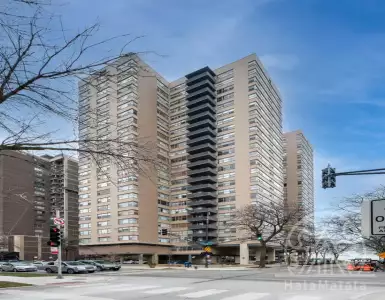




Opportunities amid weakness: preservation, missing-middle, and acquisition windows
Weak markets create options if actors act strategically. The Brookings/D.C. Policy Center paper recommends several practical moves that can stabilize neighborhoods and buy jurisdictions time to reset.
- Preservation through acquisition and covenants. Declining prices make it cheaper to purchase buildings or units for permanent affordability. The Washington Housing Conservancy model shows how buying units and placing deed restrictions can create long-term affordable inventory.
- Scale operating subsidies where they are most efficient. In the District, operating subsidies and portable vouchers may stretch further than large capital subsidies given lower market rents.
- Accelerate missing-middle construction. Small multifamily — duplexes, triplexes, townhomes, and small condo projects — provide flexible ownership and rental opportunities that can expand supply without requiring high-density towers.
These are not free or simple. Implementation hurdles include political resistance to zoning change, litigation (Arlington’s zoning changes are headed to the Virginia Supreme Court), and slow program design — Montgomery County’s current reforms affect only 1.1% of its detached single-family inventory.
Tactical advice for buyers and investors
We offer practical, experience-based guidance for market participants.
For buy-and-hold landlords:
- Re-underwrite deals with a conservative rent forecast: use the recent 1–4% annual declines as a stress case and assume operating costs will trend upward.
- Budget for higher insurance and utility expenses; verify coverage for inflation-linked premiums.
- Consider smaller, well-located multifamily or condos that can be converted between rental and owner-occupied use depending on market.
For condo buyers and for-sale investors:
- Watch homeowner association (HOA) fee trends. Rising HOAs can negate purchase-price discounts for entry-level buyers.
- Focus on cash-flow cushion: larger down payments reduce sensitivity to rate shocks.
- Avoid speculation on rapid price rebounds in the core; recovery depends on job growth and federal hiring trends.
For investors seeking value plays:
- Preservation acquisition is a lower-cost route to create affordable units but requires patient capital and operational ability to manage long-term affordability covenants.
- Distressed or motivated seller markets could create opportunities, especially for mission-driven buyers or funds that can deploy capital quickly and manage rehab costs.
Policy levers and what local governments can do
Brookings and local policy analysts present a menu of policy options that are achievable and targeted. Jurisdictions can:
- Make it easier to build missing-middle housing through zoning and streamlined approvals.
- Use the current market window to buy units or secure affordability covenants — preservation is cheaper now than at market peaks.
- Recalibrate subsidy tools away from large capital subsidies toward operating subsidies and portable vouchers where market rents have softened.
Each option has trade-offs. Streamlined zoning can increase supply but faces NIMBY politics. Preservation requires one-time capital and may be limited by scale unless multiple jurisdictions coordinate. Still, these tools are actionable.
Risks to watch
We must be clear about downside scenarios:
- If interest rates remain high and federal job losses continue, expect further price stagnation or declines in the core.
- A prolonged squeeze on property-tax revenues could trigger cuts to services or delay capital maintenance, which would in turn affect neighborhood desirability.
- Condos with high renter shares or aging capital reserves may face special assessments or distress sales if operating income stays weak.
For investors, the compass should be robust underwriting and diversified exposure across product types and geographies.
Our assessment: a selective buyer’s market with structural constraints
The DMV’s current conditions offer selective buying and preservation opportunities, especially for actors who can move capital quickly and think long term. At the same time, structural challenges — federal employment dependence, high local costs, and regulatory hurdles to new supply — mean recovery will be uneven.
If you are an investor, buyer, or policymaker, do not treat the current softness as a uniform discount. Look for assets with stable cash flow, manageable operating cost exposure, and locations tied to durable demand drivers like transit, essential services, and employment centers that are less tied to short-term federal hiring cycles.
For renters, the decline in asking rents offers breathing room. For owners and developers, this is a warning: underwrite conservatively and plan for higher operating costs. For local governments, the opportunity is to use this window to preserve affordability and enable missing-middle housing that can widen the path to homeownership for middle-income households.
Frequently Asked Questions
Q: Are rents falling everywhere in the Washington region?
A: Yes. The Brookings DMV Monitor finds asking rents declined 1%–4% across every jurisdiction between January 2025 and January 2026, with the largest decline in the District at -4.4%.
Q: Why are condo prices in D.C. down so much?
A: Condo prices are sensitive to rental demand, mortgage rates, and rising HOA and insurance costs. The District’s condo market has more investor demand and rental exposure, so weaker rents and higher fees hit prices. The analysis reports District price per square foot is -25.2% vs 2019.
Q: Does this mean it’s a good time to buy in the DMV?
A: It can be, if you have conservative underwriting, a plan for higher operating costs, and the ability to hold through cycles. Preservation purchases and missing-middle projects look attractive for those with patient capital.
Q: What should local governments prioritize right now?
A: Use current lower prices to secure affordability via acquisition and covenants, scale operating subsidies where cost-effective, and remove barriers for missing-middle housing. These moves can stabilize the market and expand affordable options.
End note: The DMV slowdown is measurable and concentrated. For anyone making a bet on Washington real estate, the essential fact is this: rents and condo prices in the District are down significantly since 2019, and underwriting must reflect lower top-line revenue and higher costs.
We will find property in USA for you
- 🔸 Reliable new buildings and ready-made apartments
- 🔸 Without commissions and intermediaries
- 🔸 Online display and remote transaction

International Real Estate Consultant

Subscribe to the newsletter from Hatamatata.com!
Subscribe to the newsletter from Hatamatata.com!
Popular Posts

We will find property in USA for you
- 🔸 Reliable new buildings and ready-made apartments
- 🔸 Without commissions and intermediaries
- 🔸 Online display and remote transaction
International Real Estate Consultant

Subscribe to the newsletter from Hatamatata.com!
Subscribe to the newsletter from Hatamatata.com!
I agree to the processing of personal data and confidentiality rules of HatamatataPopular Offers



Need advice on your situation?
Get a free consultation on purchasing real estate overseas. We’ll discuss your goals, suggest the best strategies and countries, and explain how to complete the purchase step by step. You’ll get clear answers to all your questions about buying, investing, and relocating abroad.



Sales Director, HataMatata