


Real Estate in Brittany

International Real Estate Consultant
Leave a request and our manager will contact you.
International Real Estate Consultant
Real Estate in Brittany
International Real Estate Consultant
Leave a request and our manager will contact you.
International Real Estate Consultant
Selection real estate in Brittany in 15 minutes
Leave a request and we will select the 3 best options for your budget
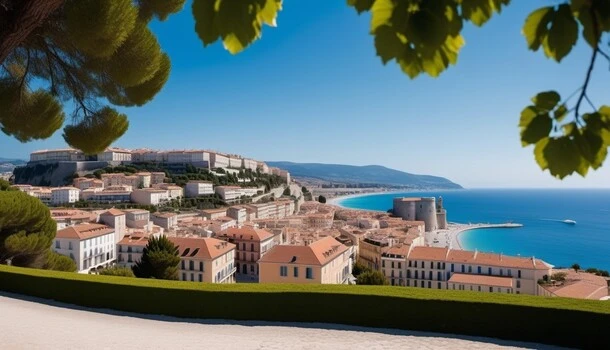


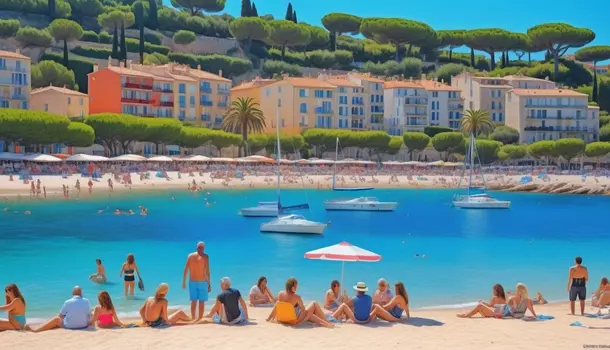

Weather in Brittany
 !
!
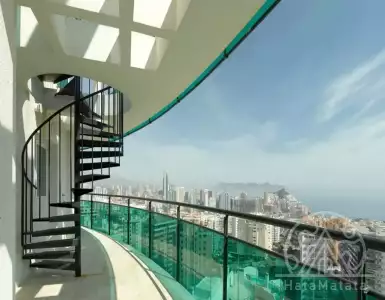
For sale Flat , Spain 213 785 $
📌 A few apartments for sale in Cala de Finestrat - a cozy place between Benidorm and Vieijahoyosa with a...
 !
!
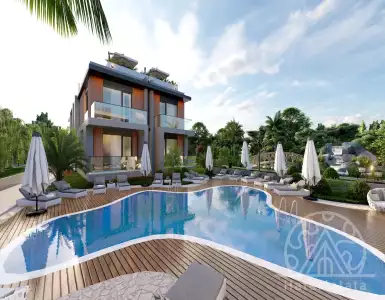
Flat for sale , Cyprus 128 914 $
The new residential complex is located in the foothills of Alsanjak. The complex consists of two two-storey buildings. Block A - 12...
For Sale Real Estate in Brittany
Didnt find the right facility?
Leave a request - we will handle the selection and send the best offers in a short period of time



Irina Nikolaeva
Sales Director, HataMatata
Selection real estate in Brittany in 15 minutes
Leave a request and we will select the 3 best options for your budget
🇫🇷 Real estate in Brittany, France — regional prices, departments, legal requirements
Brittany is one of France’s most liveable regions for buyers from single private purchasers to international investors, mixing long coastline, dynamic medium-sized cities and steady demand for both holiday and year-round homes. The region’s transport links, universities and redevelopment projects create predictable rental markets in Rennes, Vannes and Saint-Malo while coastal towns like Concarneau, Dinard and Île-de-Bréhat attract seasonal premiums. The paragraphs that follow map geography, prices, legal steps and finance so you can move from initial search to signed deed with clarity.
🌦️ Geography, climate and transport accessibility in Brittany
Brittany stretches over a peninsula with a jagged shoreline of roughly 2,700 km of coastline, offering everything from sandy beaches on the Emerald Coast to rugged granite headlands in Finistère. The climate is oceanic: mild winters, cool summers and relatively high humidity, a draw for buyers who prefer constant temperatures to continental extremes. Infrastructure supports year‑round living with a network of regional hospitals, universities and ports.
Brittany’s transport links are functional for national and international travel, with Rennes served by TGV at about 1 hour 25 minutes from Paris and Rennes–Saint-Jacques airport providing domestic and European routes. Brest Bretagne and Lorient Bretagne Sud airports link the west and south of the region to Paris, Lyon and seasonal European routes, while ferry services run from Saint‑Malo, Roscoff and Brest to the UK and Ireland. The TER Bretagne regional rail network and motorways (A84, N12 corridors) knit main cities together and make commuting feasible.
Brittany’s public and social infrastructure is robust: CHU Rennes and CHU Brest are major hospital centres, the University of Rennes 1 and 2, Université de Bretagne Occidentale (Brest) and campuses of IMT Atlantique supply skilled graduates and research activity. Secondary schools, international school options in Rennes and Vannes, and growing coworking and tech clusters like Rennes Atalante provide lifestyle and professional anchors for families and remote workers.
📈 Economy and real estate investment in Brittany
Brittany’s economy is diversified across maritime industries, agro‑food, digital and tourism, producing a regional economy worth around €100 billion and a population near 3.3 million, providing broad-based demand drivers for property. The region combines steady local employment in food processing and shipbuilding with rising jobs in software, telecoms and engineering around Rennes and Brest. Tourism contributes significantly, drawing over 10 million visitors annually across coastal and cultural sites.
Brittany’s labour market is healthier than many regions, with unemployment rates generally lower than national averages (around 7–8% depending on the zone), and inward migration from Paris and other urban centres continues to support residential demand. Long-term public and private investment — ports, university expansions and eco‑districts — underpins predictable housing need, especially in mid-size cities where supply is constrained by planning and heritage protection.
Brittany’s tourism seasonality shapes short‑term rental returns but also stabilizes long‑term yields because many buyers—second‑home owners and retirees—anchor year‑round spending in local economies. The combination of steady primary market demand in Rennes, student and young professional rental in university towns, and high‑season premiums on the coast creates a layered investment profile attractive to diversified portfolios.
💶 Property prices in Brittany
Property prices vary strongly between Rennes, coastal resorts and inland rural communes, with a premium for central urban apartments and sought‑after Gulf of Morbihan shoreline. Buyers will find meaningful differentials by city and by new build versus secondary market stock.
- Rennes (city centre apartments): €2,800–€4,500/m² depending on proximity to Thabor park, train station and university zones.
- Rennes (suburbs and new build): €2,200–€3,200/m² with new‑build premiums for energy‑efficient blocks.
- Brest (apartments): €1,200–€2,200/m² with central Recouvrance and plateau areas at the upper end.
- Vannes and Gulf of Morbihan: €2,300–€3,500/m², coastal villas and portfront units command higher prices.
- Saint‑Malo (Intra‑Muros and Paramé): €2,500–€4,000/m² for restored historic properties.
- Quimper and Concarneau (coastal): €1,500–€3,000/m² depending on port proximity.
- Rural houses and longère renovations: €1,200–€2,200/m²; isolated properties can be cheaper but renovation costs are high.
Key pricing facts to consider: notary fees for resale properties are typically around 7–8% of the purchase price, while new‑build purchases (VEFA) incur lower notary/registration costs of roughly 2–3%; new‑build units often trade at a 10–20% premium versus comparable secondary market stock because of energy performance and developer guarantees.
🎯 Best areas in Brittany to buy property
Rennes remains the regional magnet for long‑term rental and capital growth thanks to its universities, tech jobs and TGV connection to Paris. Districts to prioritise include Centre‑Ville, Thabor–Redon, La Courrouze (eco‑district) and the Atalante innovation campus area for proximity to employers. Demand is strongest for 1–3 bedroom apartments near transport and university nodes.
Brest and Quimper suit buyers seeking coastal lifestyle with lower entry prices; in Brest target Centre‑Ville, Recouvrance and the redeveloped Ateliers des Capucins area for cultural and waterfront appeal. Vannes, Auray and the Gulf of Morbihan are premium zones where portfront apartments and villas on islands like Île‑aux‑Moines attract high‑net‑worth domestic and international buyers.
Saint‑Malo, Dinard and Concarneau are classic seasonal markets where Intra‑Muros or seafront positions command the biggest premiums and short‑term rental yields can peak in summer months. For investors focused on year‑round rental stability, areas with universities (Rennes, Brest, Vannes campus sites) and business parks should be prioritised.
🏗️ Major developers and new build property in Brittany
National developers active in Brittany include Bouygues Immobilier, Nexity, Kaufman & Broad, Eiffage Immobilier and VINCI Immobilier, all delivering standard VEFA programmes in Rennes and larger towns. Regional players such as Groupe Lamotte and Groupe Legendre have a strong local footprint and often partner with municipalities on mixed‑use regeneration schemes.
Notable projects to watch include La Courrouze in Rennes — a large eco‑district combining residential, office and school infrastructure — and the Ateliers des Capucins redevelopment in Brest that converted a former naval site into cultural and residential space. Developers frequently offer early‑buyer pricing and guaranteed rental schemes on selected programmes to stimulate investor interest.
For buyers seeking new build property in Brittany:
- Developers frequently present energy‑efficient (RT2012/RE2020) projects with warranties and syndicate management.
- Off‑plan purchases typically allow staged, contractually defined payments and developer guarantees.
- Local developers often offer shared‑service management offers or rental management packages for absentee owners.
💳 Mortgages and installment plans for property in Brittany
French lenders extend mortgage products to foreigners, with non‑resident lending commonly allowing loan‑to‑value (LTV) ratios from 60% up to 80%, and in some cases 85% for EU nationals with strong profiles. Down payments typically fall in the 20–30% range for non‑residents when all costs (notary, agency fees) are included. Typical mortgage durations go up to 25 years, with flexibility on fixed and variable rate structures.
Bank requirements for a mortgage in France for foreigners usually include:
- Passport and residency documentation.
- Last 3 years of income tax returns or employer contracts.
- Bank statements and proof of savings.
- Details of other liabilities and existing mortgages.
Developers often market interest‑free staged payment plans (paiement échelonné) for VEFA new‑build properties, meaning buyers pay deposits at key construction milestones without extra interest charges between instalments. Bridging loans, currency exchange hedging and collaboration with international private banks are common ways for overseas buyers to optimise financing.
📝 Property purchase process in Brittany step-by-step
The purchase process begins with property selection and due‑diligence including energy performance certificates and local urban planning constraints; buyers should engage a bilingual notary or solicitor early. Once you make an offer and the seller accepts, a promesse de vente or compromis de vente is signed and a deposit of typically 5–10% is taken and held in escrow by the notary.
After the preliminary contract there is a 10‑day cooling‑off period for private buyers, followed by the fulfilment of any suspensive conditions (notably mortgage approval). Final signature of the acte authentique takes place at the notary’s office, after which ownership is registered and keys are handed over; resale purchases commonly close within one to two months after the preliminary, while off‑plan purchases follow the developer’s construction timeline (often 18–36 months).
Payment mechanics are formal and secured: funds are transferred by bank transfer or bank draft to the notary’s account, and full disclosure of charges, taxes and any co‑ownership rules are provided before completion. Buyers should budget for mortgage arrangement fees, notary fees (see above), and potential renovation or compliance costs for older properties.
🔒 Legal aspects, residence permits and citizenship by real estate investment in Brittany
Owning property in Brittany does not automatically grant a residence permit or French citizenship; property purchase alone is not a qualifying route to residency. Buyers seeking residence must follow standard visa and permit routes — work permits, family reunification, long‑stay visas or investor/business routes (for example the Passeport Talent – investisseur category when creating business activity and jobs in France) which rely on broader economic contribution rather than property ownership alone.
Taxation for property owners includes local taxes (taxe foncière and, where applicable, taxe d’habitation transitional rules), income tax on rental income based on declared revenue, and social charges on rental profits. For wealthier owners, the French real estate wealth tax (IFI) may apply above a net real estate threshold of €1.3 million in taxable assets. Estate and inheritance rules follow French forced‑heirship norms, which is an important consideration when structuring cross‑border ownership.
Legal practicalities to plan for:
- Use a French notary (notaire) for the deed and registration.
- Consider an accountant for rental taxation and VAT issues on commercial rental.
- Consult an immigration lawyer if your primary aim is residence permit by real estate investment in Brittany or citizenship by real estate investment in Brittany.
🎯 Investment advantages and buyer scenarios for real estate in Brittany
Brittany suits a wide range of buyer scenarios, from students and young professionals to retirees and international investors seeking diversification. For long‑term capital growth and rental income target Rennes city centre and surrounding communes for steady yields and capital appreciation driven by the university and tech clusters. For stable student rental, one‑bed and studio apartments near Rennes university nodes typically deliver gross yields of 4–6%.
For holiday rental and short‑term seasonal income, coastal hotspots such as Saint‑Malo, Dinard, Concarneau and the Gulf of Morbihan deliver peak summer rates, with occupancy volatility outside the season. Premium residential buyers seeking a second home or lifestyle asset should look at Vannes, Auray, Île‑aux‑Moines and Belle‑Île for prestige properties and long‑term capital preservation.
Examples of practical buyer‑property matches:
- Living/relocation: Rennes (Thabor, Centre‑Ville) — 2–4 bedroom apartments or townhouses.
- Long‑term rental income: Student pads in Rennes and Brest — studios and 2‑beds near campuses.
- Short‑term investment/holiday rental: Saint‑Malo Intra‑Muros, Vannes portfront — 1–3 bedroom units.
- Premium segment and second home: Golfe du Morbihan villas and island cottages.
- Renovation and value‑add: Longères and farmhouses in Finistère and Côtes‑d’Armor.
Brittany’s combination of predictable local demand, established tourism flows and infrastructural projects makes it well suited to mixed portfolios that balance seasonal and year‑round income.
Brittany’s market offers clarity if you start with objectives — lifestyle, rental yield, capital growth — and align location, property type and financing accordingly. Professional support from a bilingual notary, a local agent and a mortgage broker experienced with non‑resident lending will accelerate decision‑making and reduce execution risk so you can move from search to ownership with confidence.
Frequently Asked Questions
How much do properties cost in Brittany?
Prices vary widely: coastal hotspots command €3,000–€4,500/m² (≈$3,200–$4,900/m²), city apartments (Rennes) often €2,500–€4,000/m² (≈$2,700–$4,300/m²) and rural areas €1,200–€2,000/m² (≈$1,300–$2,200/m²). Typical sale prices range roughly $120k–$450k depending on size and location; expect higher premiums for sea view or tourist towns.
Can foreigners buy property in Brittany?
Yes. There are no nationality restrictions on buying real estate in Brittany. Non‑EU buyers can purchase freehold, but buying does not grant visa or residency. Lenders, tax paperwork and notarised deeds follow the same formalities; expect ID, proof of funds, and a French tax number for transactions.
Is Brittany good for real estate investment?
Brittany offers solid niche investment: strong summer tourism on the coast and steady student/urban demand in Rennes. Typical gross yields: 2.5–6% for long‑term rentals, 4–8% for holiday lets in busy towns. Coastal properties are more liquid; inland homes sell slower but at lower entry costs.
What taxes and transaction costs should I expect in Brittany?
For resale property expect transfer/notary costs ~7–8% of price (≈€7–€8k per €100k, $7–$8k). Estate agent fees often 3–6%. Annual property taxes (taxe foncière/taxe d'habitation variants) commonly $200–$2,000/yr (€180–€1,800). Capital gains and social contributions apply on resale; combined tax burdens can reach ~30%+ before exemptions.
How long does buying property in Brittany take?
Typical timeline: 6–12 weeks from accepted offer to keys for existing homes: signing compromis (offer contract) then final acte at notary after due diligence. Mortgage approvals can add 4–8 weeks. Renovations or heritage approvals extend timelines by months.
Can non‑residents get a mortgage for Brittany property?
Yes. French banks lend to non‑residents but conditions are stricter: expect 60–80% LTV (so 20–40% down), requirement for stable income and French bank account. Mortgage approval commonly takes 4–8 weeks; rates and terms vary by borrower profile.
Is Brittany suitable for families relocating there?
Yes. Brittany offers good daily life: public healthcare network and regional hospitals, state and private schools, family amenities, and regional transport (urban buses, regional trains). Cities like Rennes have strong schooling and services; rural areas offer quieter life but may need a car for daily needs.
Can digital nomads live and work in Brittany?
Brittany suits remote work in towns: fibre broadband and 100–1,000 Mbps in cities/towns, rural areas may have ADSL 10–30 Mbps. Plenty of cafés and coworking in urban centers; long stays require correct visa for non‑EU nationals (Schengen limits apply). Cost of living can be lower than Paris.
Does buying property in Brittany give residency or a golden visa?
No. Property purchase alone does not grant French residency or citizenship. EU/EEA citizens have freedom of residence; non‑EU nationals need an appropriate long‑stay visa or residence permit based on work, family, retirement or investor visas — each has income/asset requirements separate from buying a home.
What renovation rules and costs apply in Brittany?
Renovation costs vary: minor work $80–$300/m² (€70–€270/m²), full renovations $320–$1,300/m² (€300–€1,200/m²). Coastal or historic zones may require planning permission or architect involvement; listed buildings need heritage approvals and can increase timelines by months. Always check local mairie rules before starting work.
Properties by Region
Properties by Country
- Real estate in Bulgaria (11315)
- Real estate in Montenegro (5367)
- Real estate in Indonesia (2423)
- Real estate in Spain (2289)
- Real estate in Turkey (2223)
- Real estate in Portugal (2046)
- Real estate in Italy (1892)
- Real estate in Cyprus (1587)
- Real estate in Thailand (1566)
- Real estate in Croatia (1431)
- Real estate in Greece (1079)
- Real estate in USA (1013)
- Real estate in France (1006)
- Real estate in Georgia (519)
- Real estate in Serbia (328)
- Real estate in Slovenia (123)
- Real estate in Egypt (24)
Free real estate consultation in Brittany
Don't know which area to choose in Brittany? We will tell you in which areas it is better to live or invest, and show you the appropriate options.

Maria Guven
Head of Direct Sales Department
+90-507-705-8082