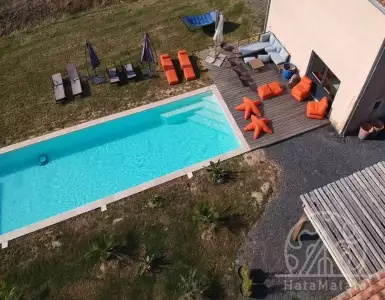
 3 172 309 $
House with 12 bedrooms in Biarritz, France
Bedrooms: 12 Bathrooms: 11
Biarritz, France
Submit RequestWe have collected the most relevant properties in France, Nouvelle-Aquitaine Here you will find listings from reliable real estate agencies and property developers. HataMatata - your online search for accommodation abroad
 Irina Nikolaeva, Southern Europe Real Estate Expert
Updated:
3 172 309 $
Biarritz, France
Submit Request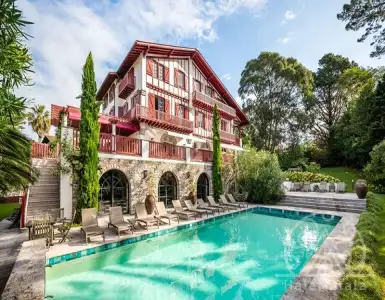 12 176 260 $
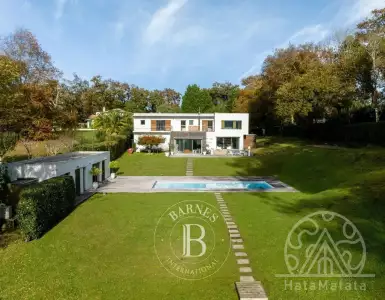 5 250 718 $
Leave a request and we will select the 3 best options for your budget
 Nouvelle-Aquitaine44 listings
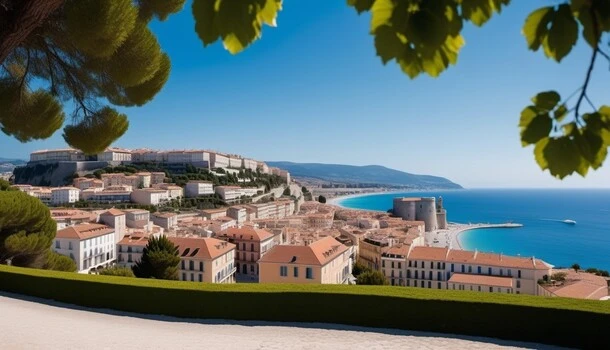 Côte d'Azur and Provence625 listings
 Paris and the suburbs124 listings
 Southern France55 listings
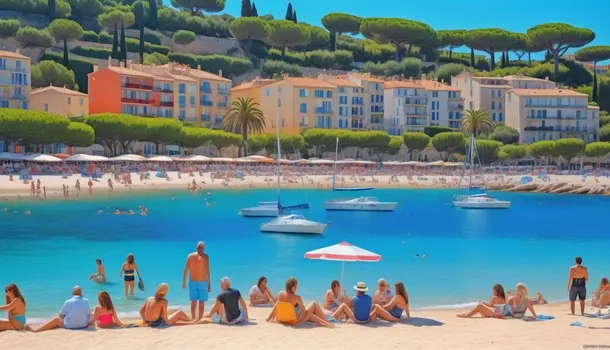 Other regions of France42 listings
Discover the perfect combination of natural beauty and rich cultural history in France, Nouvelle-Aquitaine - a place where each season reveals its unique charms, from frosty winters to sunny summers. This picturesque region offers not only a variety of climates, but also unparalleled opportunities to buy property, whether it be a permanent home, a holiday villa or an investment property.
in France, Nouvelle-Aquitaine, Nouvelle-Aquitaine each property reflects the unique spirit of the area, giving owners not just a place to live, but a history and opportunities for a new life. Together with us you will open the doors to a world of outstanding property offers in the most attractive corners of land, where every house offers a story and every location offers unique living and investment opportunities
 Legal review:
Deni Gerikhanov, International Real Estate Lawyer
 Financial review:
Evgeniya Skripko, Financial Expert in International Real Estate
Reviewed:
Nouvelle-Aquitaine is a region of wide landscapes, from the vineyards of Bordeaux to the surf beaches of the Atlantic coast and the limestone villages of the Dordogne. With an area of around 84,000 km² and a population of about 6 million, the region combines strong transport links, established services and attractive lifestyle infrastructure that appeals to private buyers and international investors seeking property in Nouvelle-Aquitaine. This text distills practical facts, price ranges, financing rules and legal realities so you can evaluate real estate in Nouvelle-Aquitaine with confidence.
Nouvelle-Aquitaine is the largest French region by land area and benefits from a predominantly oceanic climate on the coast with milder winters inland and more continental microclimates in the Dordogne and Limousin. Average annual temperatures on the coast sit around 13–15°C, with more sunlight and milder winters than inland departments.
Transport infrastructure is solid: Bordeaux-Mérignac Airport handles international flights and the LGV link makes Bordeaux about 2 hours by TGV from Paris. Regional airports include Biarritz Pays Basque, La Rochelle – Île de Ré, Pau Pyrénées and Bergerac, while major motorways A10 (Paris–Bordeaux), A63 (Bordeaux–Spain) and A89 (Bordeaux–Lyon) connect the region.
Public services and lifestyle infrastructure are well developed in urban centres: University of Bordeaux (over 50,000 students), University of Poitiers, and University of Limoges; major hospitals include CHU de Bordeaux, CHU de Poitiers and CHU de Limoges. International schooling options and private clinics are concentrated in Bordeaux, Biarritz and La Rochelle.
Nouvelle-Aquitaine’s economy is diversified: agriculture and viticulture (Bordeaux wines, Cognac), tourism, aeronautics supply chain, digital services and food-processing SMEs. Regional GDP is roughly in the range of €170–180 billion, making the region a significant economic player in France.
Tourism drives seasonal demand — coastal destinations and heritage sites attract more than 25 million visitors a year, supporting short-term rental markets and hospitality investment. Employment patterns vary: larger urban hubs show diversified employment while rural departments rely on agriculture, winemaking and SMEs. Unemployment in the region fluctuates but typically sits close to the national average, around 8–10% depending on the department.
For investors the mix matters: Bordeaux provides liquidity and capital-growth prospects; Arcachon, Cap Ferret and Côte Basque support high-end seasonal rental income; Dordogne and Lot-et-Garonne offer lower entry prices with renovation upside and steady long-term demand from second-home buyers.
Property in Nouvelle-Aquitaine shows wide variation between coastal, urban and rural markets. Prices move with local demand, transport links and tourism seasonality. Here are typical ranges per square metre and common transaction types:
Market dynamics and yields:
Bordeaux metropolitan area (Mériadeck, Chartrons, Saint-Michel, Bassins à Flot) gives capital-growth and rental liquidity. Bordeaux suburbs such as Pessac, Talence and Mérignac attract families and buyers seeking schools and commuter links.
Côte Basque towns (Biarritz, Saint-Jean-de-Luz, Bayonne, Anglet) are premium for seasonal rentals and luxury villas; demand remains strong from domestic and international buyers. Arcachon Bay (Pyla, Arcachon town) and Cap Ferret command top prices and stable high-end demand.
Atlantic coast and islands: La Rochelle, Île de Ré, Royan offer stable holiday rental markets; Dordogne (Sarlat, Bergerac, Périgueux) is popular with foreign buyers for stone houses and renovation projects. Pau and Agen balance affordability and regional employment hubs.
National and regional developers actively deliver projects across the region. Names you will encounter include Bouygues Immobilier, Nexity, Kaufman & Broad, Groupe Pichet (Bordeaux-based), Eiffage Immobilier and Pierre & Vacances for tourist residences.
Notable urban regeneration and new-build zones include Bordeaux’s Bassins à Flot districts and redevelopment around the Chartrons quays, plus waterfront projects and mixed-use programmes in La Rochelle and Bayonne. Developers often market off-plan units under VEFA with structured payment plans.
Buyers should check developer guarantees (garantie financière d’achèvement), pre-sales records, and local planning status. Tax incentives for new-build rentals (Pinel or other schemes) may apply depending on zoning and eligibility.
French banks commonly lend to non-residents: expect LTVs between 60–80% for foreign buyers depending on profile, with many lenders requesting a down payment of 20–30% for non-resident borrowers. Loan terms typically run up to 20–25 years; interest rates fluctuate with market conditions but commonly lie in the mid-single digits for recent cycles.
Documentation for mortgage in France for foreigners includes passport, proof of income, tax returns, bank statements and the property reservation contract. Local banks with branches in the region — BNP Paribas, Crédit Agricole, Société Générale, Caisse d’Epargne, Crédit Mutuel — all issue mortgages to international clients.
Developers commonly propose staged payments for new build property in Nouvelle-Aquitaine (VEFA), and many offer interest-free installment plans during construction and compliance with French consumer law obligations.
Begin with selection and a reservation/offer; once accepted you typically sign a compromis de vente or reservation contract for new builds (VEFA). Buyers normally pay a deposit of 5–10% on the compromis followed by a 10‑day cooling-off period.
Mortgage approval must be sought promptly — lenders normally give a formal offer within 30–60 days depending on complexity. The transaction culminates with signature of the acte authentique at a notary’s office; notary fees are approximately 2–3% for new builds and 6–8% for resale and include registration duties.
Legal purchase formats include private individual acquisition or via an SCI (Société Civile Immobilière) structure for shared ownership; payment is by bank transfer to notary escrow. For new build property, the VEFA regime secures buyer protections and warranties.
Foreigners face no prohibition on buying property in France; acquisition is straightforward. Legal due diligence should cover servitudes, planning, energy performance (DPE) and any historical protections, especially in heritage zones. Taxes to consider include taxe foncière, potential taxe d’habitation for second homes in some communes, income tax on rental revenues and capital gains tax rules for non-residents.
Buying property does not automatically grant the right to live in France. There is no direct “residence permit through property purchase in Nouvelle-Aquitaine” route or a “citizenship by real estate investment in Nouvelle-Aquitaine”. Residency options rely on standard immigration channels (long-stay visas, work visas, talent passports, family reunification). For those seeking “how to get a residence permit in France through property”, the correct path is to consult immigration and tax lawyers because property ownership alone will not secure a permit.
Non-residents should also evaluate inheritance rules and consider cross-border estate planning; French succession law can be compulsory in some circumstances, so professional advice is recommended.
Lifestyle buyers and families often target Bordeaux, Pessac or Mérignac for schools, hospitals and city amenities; purchase sizes commonly range 60–120 m² for family apartments or 120–250 m² for suburban houses.
Buy-to-let investors look to student rentals around Bordeaux universities and coastal short-let in Biarritz, Arcachon, La Rochelle where occupancy peaks seasonally; expect gross rental yields of 3–6% in mainstream markets, higher for handfuls of well-managed holiday rentals.
Remote workers and retirees are attracted to Dordogne and Lot-et-Garonne for lower prices and quality of life; renovation projects are common and often bought as second homes with long-term plans for relocation. High-net-worth purchasers target villas in Cap Ferret, Arcachon Bay and Biarritz for capital preservation and lifestyle use.
New build property in Nouvelle-Aquitaine suits buyers seeking warranties, energy efficiency and simplified rental management; secondary market property is fertile for value-add renovation plays.
Nueva-Aquitaine offers a layered market: urban growth and rental stability in Bordeaux, luxury seasonal demand on the Atlantic coast, and value opportunities inland in Dordogne and Limousin. Whether you pursue a new build property in Nouvelle-Aquitaine with developer guarantees, a secondary market property in Dordogne to renovate, or a Bordeaux apartment for buy-to-let, the region’s mix of infrastructure, tourism and diversified economy supports multiple buyer strategies. If you want specific listings, projected yields for a target postcode or an introduction to local developers and notaries I can prepare tailored options and a step-by-step financing checklist for your scenario.
Don't know which area to choose in Nouvelle-Aquitaine? We will tell you in which areas it is better to live or invest, and show you the appropriate options.