


Real Estate in Burgundy

International Real Estate Consultant
Leave a request and our manager will contact you.
International Real Estate Consultant
Real Estate in Burgundy
International Real Estate Consultant
Leave a request and our manager will contact you.
International Real Estate Consultant
Selection real estate in Burgundy in 15 minutes
Leave a request and we will select the 3 best options for your budget

Weather in Burgundy
 !
!
For sale Flat , Spain 213 785 $
📌 A few apartments for sale in Cala de Finestrat - a cozy place between Benidorm and Vieijahoyosa with a...
 !
!
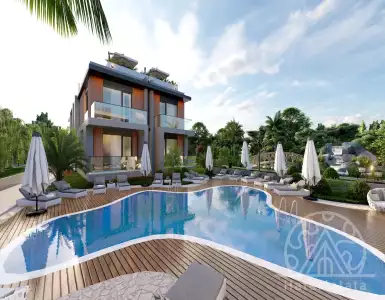
Flat for sale , Cyprus 128 914 $
The new residential complex is located in the foothills of Alsanjak. The complex consists of two two-storey buildings. Block A - 12...
For Sale Real Estate in Burgundy
Didnt find the right facility?
Leave a request - we will handle the selection and send the best offers in a short period of time



Irina Nikolaeva
Sales Director, HataMatata
Selection real estate in Burgundy in 15 minutes
Leave a request and we will select the 3 best options for your budget
🇫🇷 Buying property in Burgundy, France: prices, towns (Dijon, Beaune, Chablis)
Burgundy is one of France’s most attractive regions for buyers seeking quality of life, stable returns and cultural depth, from private buyers to international investors. The region combines accessible transport links to Paris and Lyon, strong local services in cities such as Dijon and Beaune, and a mix of property types from historic townhouses to agricultural domaines and new-build apartments. The following guide explains how to buy property in Burgundy, what to expect on prices and returns, financing and legal realities, and which locations suit different buyer scenarios.
🚆 Burgundy geography, transport and infrastructure that matter for property buyers
Burgundy (Bourgogne, covering Côte-d’Or, Saône-et-Loire, Yonne and Nièvre departments) is centrally located between Paris and Lyon, with Dijon TGV providing regular services to Paris in around 1 hour 30 minutes and to Lyon in roughly 1 hour 10 minutes. Major motorways A6 and A31 cross the region, making car access straightforward for second-home owners and logistics investors. Regional airports include Dijon-Bourgogne and nearby Lyon-Saint Exupéry for international connections; Paris CDG is a fast rail ride away.
Burgundy’s urban network supports buyers: CHU Dijon Bourgogne is the regional hospital hub, plus full hospital centers in Beaune, Chalon-sur-Saône and Mâcon. The University of Burgundy (Université de Bourgogne) in Dijon hosts campuses for over 30,000 students across faculties and professional schools, underpinning student rental demand.
Burgundy’s lifestyle infrastructure is tangible: Michelin-starred restaurants, wine tourism operators along the Route des Grands Crus, equestrian centres, and the Burgundy Canal network for boating tourism. Fibre rollout and mobile coverage are improving fast in cities: Dijon and Mâcon already have extensive fibre availability, supporting remote work and relocation buyers.
💶 Property prices in Burgundy: ranges by type and area
Prices for property in Burgundy vary sharply by city, village and type of asset, from rural homes to premium wine village addresses. Typical price ranges:
- Dijon (city centre): €2,200–€3,500/m² for apartments; townhouses and period properties can exceed €4,000/m² in historic streets.
- Beaune and wine villages (Nuits-Saint-Georges, Gevrey-Chambertin): €2,500–€8,000/m² depending on location and provenance; prime historic hôtels particuliers and houses near vineyards command the top end.
- Mâcon & Auxerre: €1,800–€3,000/m² in urban cores; suburban and peri-urban stock lower.
- Chalon-sur-Saône, Nevers, rural Morvan: €800–€2,000/m², attractive for lower-entry investors or buy-to-let in small towns.
Typical transaction costs and taxes to budget for are notaire and transfer fees of around 7–8% on the secondary market and ~2–3% for new-build (VEFA) purchases. Rental yields across Burgundy commonly sit in the 3.0–5.5% gross range, with higher yields (up to 6–8%) possible in niche student or seasonal short-let markets.
🎯 Best areas in Burgundy to buy property for different buyer goals
Dijon is the regional capital and the easiest choice for long-term residential buyers and professionals relocating: good schools, university, hospitals and corporate HQs. Beaune and the Côte de Beaune are best for premium buyers seeking wine-country prestige and tourist rentals. Mâcon and Chalon-sur-Saône are practical picks for commuter buyers and value-focused investors. The Morvan and Burgundy Canal corridor suit second-home buyers who prioritise nature and boating.
Urban districts in Dijon to note by name include Centre-Ville, Montmuzard, Port du Canal and the expanding Valmy corridor where residential refurbishments and service-led projects are concentrated. In Beaune, priority zones are Centre Historique, Hôtel-Dieu area and residential sectors near the wine estates toward Pommard and Volnay. In Saône-et-Loire, target Saint-Remy and Saint-Loup neighbourhoods for family homes and established rental demand.
Buyers focused on short-term holiday rental should prioritise pedestrian historic cores and properties with easy parking access and proximity to tourist sites. Long-term rental and student landlords should focus on university-adjacent streets in Dijon such as Rue d’Auxonne and sectors with good tram/bus links.
🏗️ Major developers and new-build activity in Burgundy
National developers with active programmes in Burgundy include Nexity, Bouygues Immobilier, Kaufman & Broad, Vinci Immobilier and Altarea Cogedim, who promote new-build apartments in Dijon, Mâcon and Chalon-sur-Saône. These developers often deliver VEFA (sale-in-future-state) schemes that meet energy standards (RT/RE) and include staged payments.
Regional players and social landlords such as Côte-d’Or Habitat and local promoteurs carry out urban renewal and mixed-use projects, especially around Dijon’s rail and university zones, and in regeneration areas in smaller towns. Developers commonly market T2–T4 apartments with parking, lift access and energy performance certifications (BBC/RT/RE2020 in recent projects).
Buyers should ask developers for concrete deliverables and warranty terms: décennale 10-year warranty, garantie de parfait achèvement, and builder’s performance guarantees. Developers sometimes market early-buyer discounts and interest-free installment plans during the construction phase for reservation and staged payments.
🧾 Mortgages, financing and installment plans for foreign buyers in Burgundy
French banks actively lend to non-residents; major lenders operating in Burgundy include BNP Paribas, Crédit Agricole, Société Générale and local Crédit Mutuel branches. Foreign buyers can typically obtain mortgages covering up to 70–80% of the purchase price, subject to borrower profile; investor-grade borrowers with strong documentation can sometimes reach 85–90% with a French guarantor.
Down payment requirements for non-residents commonly start at 20–30%, plus purchase fees and taxes. Typical mortgage durations offered are 15–25 years, and competitive fixed-rate offers often range from around 1.5–3.5% depending on credit, term and loan-to-value; variable and mixed mortgages are also available.
Developers and promoters in Burgundy frequently offer paid-in-stages for new-build property under VEFA: reservation deposit (commonly ~5–10%), followed by progress payments to the key legal milestones and final balance at delivery. Some developers provide interest-free instalment plans during construction to ease cashflow for buyers.
🧭 Practical step-by-step purchase process for property in Burgundy
First step is property selection and technical due diligence: viewings, building diagnostics (DPE energy performance, plomb, amiante, termites where relevant) and title checks. Second step is reservation via a promesse de vente or compromis de vente with a deposit (commonly ~5–10%). Third step is mortgage application and obtaining a loan offer; French lenders typically require proof of income, tax returns, passport, and bank statements.
Fourth step is the cooling-off period: after signing a preliminary contract, buyers have a 10-day unconditional withdrawal window. Fifth step is final signature at the notaire, payment of the remainder and registration of title; the notaire handles transfer taxes and registration at the Service de Publicité Foncière. Buyers should budget for notaire fees and registration costs as additional expenses.
Sixth step post-signature is practical handover and utility transfers, dwelling insurance and registration for local tax (taxe foncière, taxe d’habitation where applicable). For new builds (VEFA) buyers receive delivery certificates and warranties; for older properties, ensure completion of any agreed-noted repairs before final acceptance.
⚖️ Legal aspects, residence permits and citizenship related to property in Burgundy
Buying property in France does not automatically grant a residence permit or lead directly to citizenship. Foreign nationals can buy and own real estate freely, and ownership can support visa applications, but a purchase alone is not a legal route to residency. Prospective buyers should be aware that residence permits require separate administrative procedures through French consulates or prefectures.
Long-stay visas and residence permits depend on personal circumstances (work, family reunification, retirement, skills/passport talent categories) rather than real estate ownership. Citizenship by real estate investment is not a French option; naturalisation follows standard residency and language/integration requirements and cannot be substituted by purchase.
Investors looking for residency should consult immigration rules and consider combining property purchase with employment, business creation or retirement visa routes. Legal and tax advice is strongly recommended to manage cross-border inheritance, wealth tax exposure and rental income taxation.
📈 Economy and investment potential of Burgundy for real estate buyers
Burgundy’s economy is diversified: strong wine and agri-food sectors, light industry, logistics along the A6 corridor and growing services in Dijon. The region’s GDP is significant in national terms and supports stable local demand for housing from working professionals, students and tourism-related seasonal tenants. Tourism is a major driver: Burgundy’s wine tourism and gastronomy attract several million visitors annually, generating short-term rental opportunities especially in Beaune and the wine villages.
Employment hubs are concentrated in Dijon (administration, health, university), Mâcon (industry and logistics) and industrial zones around Chalon and Le Creusot. Regional unemployment and growth indicators have been moderate but stable; this stability underpins conservative long-term rental yields and low vacancy in key urban centres.
Real estate investment in Burgundy benefits from predictable seasonal demand patterns—long-stay municipal tenants in Dijon, consistent tourist flows in Beaune, and lower volatility in rural holiday lettings—making it suitable for mixed-portfolio strategies combining secondary market property in cities and new build property in Burgundy for more secure tax and warranty regimes.
🧩 Which buyer scenarios fit Burgundy and which property types to pursue
Living and relocation: buyers relocating with families should prioritise Dijon Centre-Ville or Montchapet for schools and medical services, with 3–4 bedroom houses in suburbs priced typically from €300,000–€550,000.
Rental income and long-term investment: investors seeking stable yields should target student and professional apartments in Dijon (studio/T1 yields often 3–4.5% gross) or affordable multi-unit houses in Chalon-sur-Saône and Auxerre where acquisition prices are lower.
Short-term and seasonal investment: holiday rentals near Beaune, the Côte de Nuits and the Burgundy Canal yield strong summer occupancy; look for fully furnished apartments and houses with tourist licences. Premium segment buyers should consider vineyard-adjacent properties in Pommard, Volnay, Meursault, Gevrey-Chambertin, where prestige and long-term capital appreciation can outperform average market growth.
Second homes and remote work: properties in the Morvan and canal-side villages often start under €200,000 for renovated cottages, with larger domaines and small vineyards priced much higher; these locations offer lifestyle value for remote workers and families seeking weekend retreats.
Buying property in Burgundy is a practical pathway to a blend of lifestyle, cultural richness and steady returns, but it requires clear planning on financing, legal implications and taxation. Work with local notaires, chartered surveyors, reputable agents and established lenders; ask developers for guarantees and insurance documentation where you buy new build property in Burgundy. Each micro-market—from Dijon’s student flats to Beaune’s luxury wine houses—has its own rules on pricing, rental demand and renovation costs, so focus on detailed due diligence and a financing plan that fits your scenario. Whether you are buying a first home, a rental property, a vacation house or a premium domaine, Burgundy offers a range of opportunities for measured, long-term real estate investment in France.
Frequently Asked Questions
How much do properties cost in Burgundy?
Prices vary widely: city apartments in Dijon/Beaune often range $2,300–$3,800/m² (€2,100–€3,500/m²). Small town homes: $1,000–$2,500/m² (€900–€2,300/m²). Rural houses and farmsteads commonly sell for $120k–$420k (€110k–€390k). Prime wine village parcels can be far higher. These are regional averages—location, condition and vineyard status drive price.
Can foreigners buy real estate in Burgundy?
Yes. France places no nationality restriction on property ownership. Non‑EU buyers can purchase, but financing may require 20–30% down and extra documentation. Expect notary fees (~7–8% for resale properties) and local taxes. Buying property alone does not grant residency; legal and tax advice is recommended.
Is investing in Burgundy real estate profitable?
Investment potential: long‑term rental yields typically 3–6% gross; short‑term holiday lets can reach 5–10% gross in tourist spots. Tourist demand peaks in summer and harvest; liquidity is slower than major cities—expect 3–24 months to sell depending on location. Factor renovation and taxes when calculating net returns.
What is daily life like if I relocate to Burgundy?
Burgundy offers small cities and rural life. Dijon/Nevers/Beaune have hospitals, secondary schools and trains (regional TER; Dijon has TGV links). Supermarkets, markets and local services are common; rural areas require a car. Expect good healthcare access in cities and local primary schools in most communes.
Is Burgundy good for digital nomads or remote work?
Many towns have reliable internet and growing fiber coverage in urban centres; rural pockets may have DSL or satellite. Coworking exists in larger towns. Long stays are feasible; non‑EU remote workers need the appropriate long‑stay/work visa—property ownership alone won’t permit residence. Check fiber availability before buying.
Does buying property in Burgundy grant residency or a golden visa?
No. France does not grant residency or a golden visa solely for property purchase. Non‑EU buyers must apply for a long‑stay visa, work permit, or specific talent/retirement visa to reside legally. EU/EEA citizens have free movement. Consult consular rules for visa eligibility.
What taxes, fees and risks should buyers expect in Burgundy?
Key costs: notary/transfer fees ~7–8% (resale) or ~2–3% (new). Annual taxes: taxe foncière and, rarely for main residence, taxe d'habitation. Capital gains on second homes can be up to ~36% (19% income tax + social charges) before reliefs. Common risks: hidden renovation costs, slow resale in rural areas, and incorrect zoning or diagnostics.
What do renovations cost and how long do they take in Burgundy?
Renovation costs: basic refurbishment $150–$400/m² (€140–€370/m²); full structural/roof/insulation work $800–$1,800/m² (€740–€1,660/m²). Timelines: small jobs 1–3 months; major restorations 6–18 months. Rural areas may face longer waits for skilled trades (weeks to months) and require building permits for structural changes.
Can I buy vineyard or agricultural land in Burgundy?
Yes, but vineyards and agricultural land are regulated. AOC rules control vine use, yields and labelling; planting new vines or changing land use may need approvals and agricultural classification. Farm subsidies and tax status may require registering as an agricultural entity. Consult local agricultural authorities before purchase.
Are short‑term holiday rentals allowed in Burgundy?
Short‑term rentals are common but regulated: many communes require registration with the mairie and a local registration number; some tourist towns limit rental use or require change‑of‑use permits. Seasonality: busiest in summer and harvest; estimated occupancy can range 40–70% annually depending on location. Check local rules before buying for holiday lets.
Properties by Region
Properties by Country
- Real estate in Bulgaria (11315)
- Real estate in Montenegro (5367)
- Real estate in Indonesia (2423)
- Real estate in Spain (2289)
- Real estate in Turkey (2223)
- Real estate in Portugal (2046)
- Real estate in Italy (1892)
- Real estate in Cyprus (1587)
- Real estate in Thailand (1566)
- Real estate in Croatia (1431)
- Real estate in Greece (1079)
- Real estate in USA (1013)
- Real estate in France (1006)
- Real estate in Georgia (519)
- Real estate in Serbia (328)
- Real estate in Slovenia (123)
- Real estate in Egypt (24)
Free real estate consultation in Burgundy
Don't know which area to choose in Burgundy? We will tell you in which areas it is better to live or invest, and show you the appropriate options.

Maria Guven
Head of Direct Sales Department
+90-507-705-8082