


Real Estate in Paris and the suburbs

International Real Estate Consultant
Leave a request and our manager will contact you.
International Real Estate Consultant
Real Estate in Paris and the suburbs
International Real Estate Consultant
Leave a request and our manager will contact you.
International Real Estate Consultant
Selection real estate in Paris and the suburbs in 15 minutes
Leave a request and we will select the 3 best options for your budget


Weather in Paris and the suburbs
 !
!
For sale Flat, Spain 212 594 $
📌 A few apartments for sale in Cala de Finestrat - a cozy place between Benidorm and Vieijahoyosa with a...
 !
!
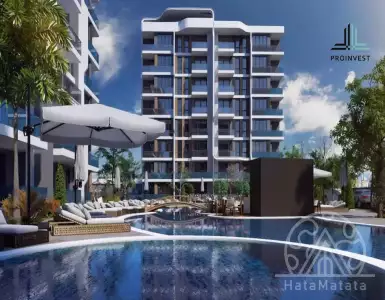
Buy flat, Turkey 168 206 $
ID AN 24382 Main Features: Location:Antalya District:Altintaş Type of property: Housing under construction Number of rooms: 1+1, 2+1
For Sale Real Estate in Paris and the suburbs
Houses in Paris
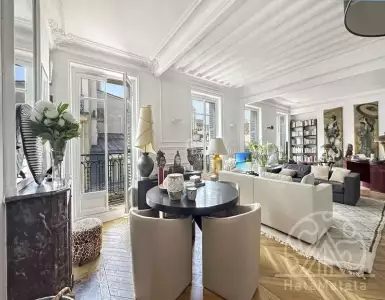


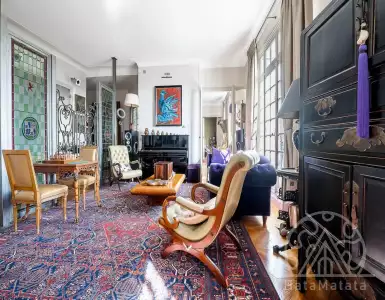
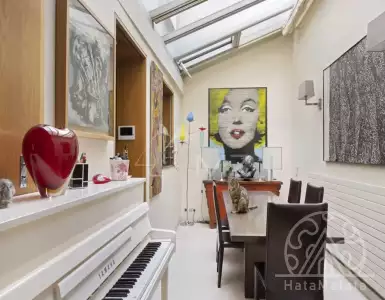
Flats in Paris

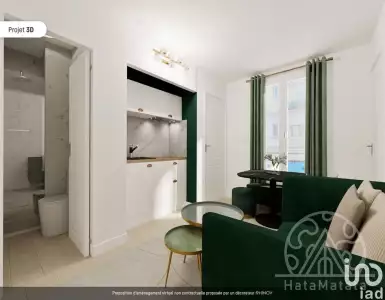
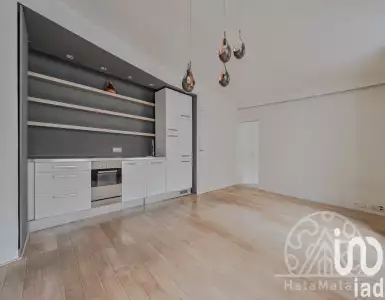
Do you want to buy real estate in Paris and the suburbs? We'll tell you where to start
Leave a request and we will select the 3 best options for your budget
International Real Estate Consultant
Didnt find the right facility?
Leave a request - we will handle the selection and send the best offers in a short period of time



Irina Nikolaeva
Sales Director, HataMatata
Selection real estate in Paris and the suburbs in 15 minutes
Leave a request and we will select the 3 best options for your budget
🇫🇷 Buying property in Paris and the inner suburbs — apartments, houses, prices
Paris and its suburbs remain among the world’s most resilient and liquid property markets, where cultural density, transport infrastructure and global business combine to create predictable demand for both primary residence and investment real estate. Buying property in Paris and the suburbs means engaging with one of Europe’s largest metropolitan economies, a complex regulatory environment and a market that rewards location, access to transit and proximity to quality education and healthcare. This guide walks you through geography and climate, economic fundamentals, price brackets, key districts, developers and projects, financing options for non-residents, the practical purchase process, legal realities around residence permits and realistic investment scenarios for every buyer profile.
🌍 Geography, climate and transport accessibility across Paris and the suburbs
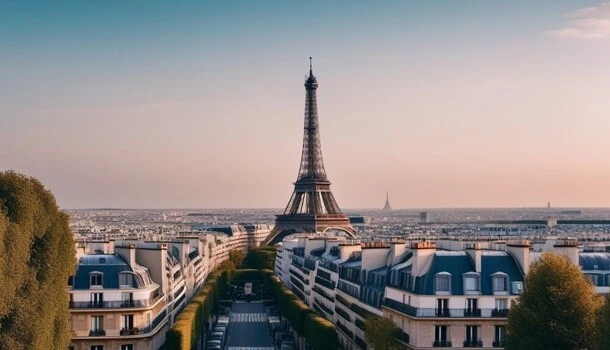
Paris sits at the heart of the Île-de-France region, a polycentric conurbation of about 12 million residents stretching from central Paris to suburbs such as Saint-Denis, Nanterre, Versailles and Créteil. The climate is temperate oceanic with mild winters and warm summers, favourable for year-round occupancy and tourism-driven rental demand. The metropolitan footprint is compact compared with many global cities, which increases competition for well-located housing.
Paris and the suburbs are exceptionally well-connected by public transport. The Métro network (16 lines) serves the city core, while Île-de-France’s RER A, B, C and regional TER services connect suburbs to the centre. The Grand Paris Express program adds 200 kilometres of new automated metro lines and 68 new stations, reshaping value corridors in Saint-Denis, Le Bourget, Champigny and Versailles suburbs. Major transport nodes include:
- Gare du Nord, Gare de Lyon, Gare Saint-Lazare and Gare Montparnasse for national and international rail.
- Roissy-Charles de Gaulle and Orly airports, facilitating global connectivity.
- La Défense business district with direct RER and metro links to central Paris.
Infrastructure extends to high-quality healthcare and education clusters. Notable institutions include Hôpital Pitié-Salpêtrière, Hôpital Européen Georges-Pompidou, Sorbonne University, Sciences Po and Paris-Dauphine, plus major business campuses in Issy-les-Moulineaux and Saclay. These anchor demand for property for sale in Paris and the suburbs from families, professionals and students.
💶 Property prices in Paris and the suburbs
Paris prices remain at the premium end of the market with strong intra-city variation by arrondissement and proximity to landmarks. Average asking price in Paris is around €11,000/m², with central arrondissements and prestige addresses significantly above this average.
Typical price ranges:
- Paris (overall): €8,000–€18,000/m², with the 1st, 6th, 7th and 8th arrondissements frequently exceeding €15,000–€18,000/m².
- Western inner suburbs (Neuilly-sur-Seine, Boulogne-Billancourt, Levallois-Perret): €7,000–€12,000/m².
- La Défense/Nanterre and business corridors: €5,000–€9,000/m² depending on building quality and tower views.
- Inner-ring suburbs (Montreuil, Saint-Ouen, Issy-les-Moulineaux): €4,000–€7,000/m².
- Outer suburbs (Seine-et-Marne, Essonne): €2,000–€4,000/m².
Price dynamics and trends:
- Gross rental yields in central Paris typically range 2–3%, reflecting high capital value and tenant demand for quality space.
- Suburban yields commonly reach 3.5–6%, depending on proximity to new Grand Paris Express stations.
- New-build premiums and lower notary fees make new build property in Paris and the suburbs attractive for certain buyer profiles, with lower running maintenance and warranties such as the Decennial Guarantee.
🎯 Best areas in Paris and the suburbs to buy property
Choosing among arrondissements and suburbs depends on buyer goals: lifestyle, long-term capital growth or rental yield. Paris neighborhoods with sustained demand include:
- Le Marais (3rd/4th arrondissement) for historic buildings, high tourist footfall and short-term rental potential.
- Saint-Germain-des-Prés (6th) and Latin Quarter (5th) for proximity to universities and cultural institutions.
- 7th arrondissement and Eiffel Tower views for premium, low-volume transactions.
- 11th and 10th arrondissements for younger renters and growing hospitality offerings.
Suburban hotspots:
- La Défense (Puteaux, Nanterre) for office-to-residential conversions and strong corporate rental demand.
- Boulogne-Billancourt, Levallois-Perret and Neuilly-sur-Seine for family buyers seeking schools and parks with city access.
- Saint-Denis and Seine-Saint-Denis for higher yield opportunities near major regeneration projects and stadium-led regeneration.
- Versailles and Saint-Germain-en-Laye for amenity-rich family homes and proximity to green spaces.
Typical buyer priorities per area:
- Luxury buyers: 6th, 7th, 8th, 16th arrondissements, Neuilly-sur-Seine.
- Professionals and corporate lets: La Défense, Issy-les-Moulineaux.
- Long-term investors: suburbs along upcoming Grand Paris Express lines.
🏗️ Major developers and projects shaping the market
Large developers and public projects are actively reshaping supply and value. Key names and projects include:
- Bouygues Immobilier — active in mixed-use and new-build apartments across Paris suburbs and in eco-districts.
- Nexity — broad portfolio from small apartments to large ZAC (urban development zone) schemes in the inner suburbs.
- Vinci Immobilier and Eiffage Immobilier — involved in office-to-residential conversions and regeneration near La Défense and Saint-Denis.
- Société du Grand Paris — the public developer behind the Grand Paris Express network and associated urban renewal near stations such as Saint-Denis Pleyel and Le Bourget.
Representative projects and zones:
- Clichy-Batignolles eco-district — mixed housing, offices and parks, near Porte de Clichy.
- Paris Rive Gauche (13th arrondissement) — university and corporate extensions with new apartment blocks and retail.
- Saint-Denis Pleyel area regeneration — expected to increase values in north-eastern suburbs with new transport nodes.
- La Défense renewal — tower refurbishment and new residential components close to the business core.
🏦 Mortgages and installment plans for buyers from abroad
French banks routinely finance non-residents, though underwriting is conservative. Key parameters:
- Typical down payment for foreigners: 20–30%, with some banks asking 30%+ for borrowers without French income.
- Loan-to-value for non-residents: commonly 70–80%, sometimes higher for EU nationals.
- Term lengths: up to 25 years, occasionally 30 for applicants under age thresholds.
- Interest rates: range widely with borrower profile, often between 1% and 3.5% for fixed-rate loans depending on term and market conditions.
Developer financing and installment plans:
- Developers often offer staged payment (paiement sur plan) during construction and interest-free construction phase schedules for new build property in Paris and the suburbs.
- First-time buyer schemes (prêt à taux zéro) can be available for qualifying buyers in new builds, subject to income caps and occupancy requirements.
- Banks accept mortgage applications supported by French tax returns, three months’ pay slips or corporate accounts and international documentation translated and notarised.
📜 Property purchase process in Paris and the suburbs
The purchase flow is standardised and transparent; notary involvement is mandatory. Main steps:
- Selection and offer — buyer submits a written offer; seller can accept, refuse or counter-offer.
- Preliminary contract (compromis de vente or promesse de vente) — sets price, deposit (commonly 5–10%) and suspensive clauses (mortgage approval).
- Cooling-off period — private buyers have a statutory 10-day cooling-off after signing the preliminary contract.
- Notary completion — notaire prepares final acte de vente, collects taxes and registers titles; buyer pays notary fees and remaining balance.
- Registration and keys — notary registers title at the Service de la Publicité Foncière; buyer takes possession.
Fees and payments:
- Notary fees for existing properties: around 7–8% of purchase price (includes transfer taxes and disbursements).
- Notary fees for new builds: around 2–3%.
- Payment methods are bank transfer to notary escrow account, with strict AML/KYC controls.
⚖️ Legal aspects, residence permits and citizenship by investment realities
Buying property in France does not automatically confer residency or citizenship. Important legal realities:
- Property ownership alone is not a pathway to a French residence permit or citizenship.
- Residence permits are issued on grounds such as employment, family reunification, long-stay visas for financial independence, or self-employment under the Passeport Talent route; real estate purchase may support a long-stay visa application but is not sufficient by itself.
- Citizenship by investment schemes do not exist in France; citizenship requires residency, language proficiency and integration criteria.
Practical legal considerations:
- Non-resident owners are subject to French tax on rental income and on capital gains from sales, with specific treaties to avoid double taxation.
- Inheritance law follows forced heirship rules unless structures (wills, holding companies) are set up with expert counsel.
- Title security and due diligence are managed by the notaire, who holds funds in escrow until registration.
📈 Economy, employment and investment potential in Paris and the suburbs
Île-de-France is the nation’s economic engine with a regional GDP equivalent to a major European country. Key figures and drivers:
- Regional GDP approximates €780 billion, representing around 30% of national economic output.
- La Défense is Europe’s largest business district and hosts thousands of multinational headquarters, driving demand for corporate accommodation, executive rentals and investor-grade apartments.
- Paris attracts over 30 million visitors annually, supporting hotel and short-stay demand in central arrondissements and around major rail stations.
Employment and growth sectors:
- Strong presence in finance, tech, research parks (Saclay cluster), luxury goods and tourism.
- Migration trends show steady population inflow to Paris and inner suburbs for employment and education, underpinning consistent rental demand and low vacancy in central markets.
- Public infrastructure investment, especially the Grand Paris Express, is altering long-term appreciation corridors — areas newly connected by automated lines tend to outperform broader averages.
🔎 Buyer scenarios and which property types suit each profile
Paris and the suburbs support diverse buyer objectives. Match of scenarios to property types and locations:
- Primary residence for families: three- to five-room apartments or houses in Boulogne-Billancourt, Neuilly-sur-Seine, Versailles and Saint-Germain-en-Laye near quality public and private schools.
- Long-term capital preservation and prestige: apartments in the 6th, 7th and 8th arrondissements and townhouses in the western suburbs.
- Rental income and yield-focused investors: multi-unit blocks or new-build apartments near Grand Paris Express stations in Saint-Denis, Montreuil or Nanterre, where yields are higher.
- Short-term or tourist rentals: central arrondissements, Marais and Latin Quarter for high ADRs and occupancy, but subject to strict municipal regulation and registration requirements.
- Remote workers and second homes: properties in Versailles, Saint-Germain-en-Laye or Issy-les-Moulineaux offering larger floorplans and green space within 20–30 minutes of central Paris.
- Premium segment and relocation: turnkey apartments near La Défense or central arrondissements for executives relocating to multinational offices.
Practical ROI expectations:
- Central Paris: modest gross yields of 2–3% but stable capital appreciation.
- Selected suburbs with improved transport: gross yields of 4–6% and potential for catch-up capital growth.
- New build apartments offer warranty protection and tax planning advantages for rental schemes (e.g., Pinel-like incentives where applicable for certain qualifying suburbs).
Buying property in Paris and the suburbs is a transaction that combines lifestyle decisions with careful planning around transport, schools, tax and financing. Buyers who prioritise proximity to Grand Paris Express stations and La Défense workplaces, or who choose established school corridors and medical hubs, typically see the smoothest occupancy and the most resilient capital values. If you are considering a purchase, align your choice of arrondissement or suburb with your objective — living, rental income, family relocation or prestige ownership — and work with local notaires, experienced mortgage advisors and reputable developers such as Bouygues Immobilier, Nexity or Vinci Immobilier to manage construction-phase payments, mortgage structuring and tax-efficient ownership. The market is competitive but transparent, and with the right strategy you can secure property in Paris and the suburbs that meets both personal needs and long-term investment goals.
Frequently Asked Questions
How much do properties cost in Paris and the suburbs?
Prices vary widely. Central Paris averages about $12,000–$20,000 per m² (€11,000–€18,000/m²). Inner suburbs (Hauts‑de‑Seine, Val‑de‑Marne) typically $5,500–$11,000/m² (€5,000–€10,000), outer suburbs $1,700–$4,800/m² (€1,500–€4,500). Studio vs family home and condition change prices significantly.
Can foreigners buy property in Paris and nearby suburbs?
Yes — there are no nationality restrictions. Non‑residents can buy freehold. Expect proof of income, ID, and local bank account for transactions. Mortgages are available to foreigners but often need 20–40% down and extra documentation. Purchase itself does not change visa/residency status.
What rental yields and investment potential in Paris area?
Paris has high demand but lower gross yields: central Paris often 2–3% gross. Suburbs can offer 3–6% gross depending on location and student/commuter demand. Liquidity is strong in central Paris, slower in outer suburbs. Short‑term rentals can boost returns but face strict local rules and higher costs.
Is Paris and the suburbs good for families relocating?
Yes. Excellent public transport (Metro, RER, buses), broad healthcare network, and many public and international schools. Typical commutes 15–60 minutes depending on suburb. Monthly public transport pass ~ $80–$120 (€75–€110). Neighborhood school catchments and hospital proximity are key buying checks.
Can a digital nomad live long‑term in Paris or its suburbs?
Good option: high fiber coverage and average broadband 100–400 Mbps in Paris and many suburbs. Coworking and café culture are abundant. Non‑EU visitors are limited to 90/180 days; long stays require an appropriate long‑stay visa. Cost of living is high compared with many cities, so budget for rent and transport.
Does buying property in Paris grant residency or a golden visa?
No — property purchase alone does not grant French residency or a 'golden visa'. Non‑EU nationals must apply for appropriate visas (long‑stay, work, family, investor business permits). Schengen rules still apply: tourist stays limited to 90 days in any 180‑day period without a visa.
What taxes, fees and risks should buyers expect in Paris area?
Transaction costs: notary and transfer taxes ~7–8% of price for resale, ~2–3% for new builds. Annual taxes vary by commune (taxe foncière, taxe d'habitation exceptions). Rental income taxed at progressive rates plus social charges (~17.2%). Common risks: co‑ownership debts, costly renovations, and local rental restrictions.
How long does buying a property in Paris and suburbs typically take?
From offer acceptance to final notary deed commonly 1–3 months if no mortgage delays. With mortgage approval allow 2–4 months. Off‑plan purchases follow contract milestones over years. Budget extra time for due diligence on co‑ownership, permits, and any renovation quotations.
What inspection pitfalls are common in Paris apartments?
Watch for co‑ownership charges, pending major works, asbestos in older buildings, poor insulation, and inefficient heating. Check syndic minutes for upcoming works and unpaid charges. Verify floor plans, legal status, and potential rent control or short‑term rental restrictions before signing.
How easy is mortgage financing for buyers in Paris and suburbs?
Banks lend to residents and non‑residents. Loan‑to‑value typically 60–85% depending on profile; non‑residents usually need 20–40% down. Typical loan terms up to 20–25 years. Interest rates vary by borrower and term; expect a range that reflects market conditions. Obtain mortgage pre‑approval to speed purchase.
Property by cities
- Real estate in Paris (116)
Real estate types in Paris and the suburbs
Real estate types by cities of Paris And The Suburbs
- Flats in Paris (102)
- Houses in Paris (11)
- Flats in Rowan (3)
- Shops in Paris (1)
- Offices in Paris (1)
- Houses in Rowan (1)
- Shops in Rowan (1)
- Offices in Rowan (1)
Properties by Region
Properties by Country
- Real estate in Bulgaria (11439)
- Real estate in Montenegro (5332)
- Real estate in Spain (5197)
- Real estate in Indonesia (2424)
- Real estate in Turkey (2317)
- Real estate in Portugal (2037)
- Real estate in Croatia (1682)
- Real estate in Cyprus (1658)
- Real estate in Italy (1567)
- Real estate in Thailand (1565)
- Real estate in Greece (1121)
- Real estate in France (1070)
- Real estate in USA (732)
- Real estate in Georgia (507)
- Real estate in Serbia (246)
- Real estate in Slovenia (125)
- Real estate in Egypt (20)
Free real estate consultation in Paris and the suburbs
Don't know which area to choose in Paris and the suburbs? We will tell you in which areas it is better to live or invest, and show you the appropriate options.

Maria Guven
Head of Direct Sales Department
+90-507-705-8082