


Real Estate in Paris Île-de-France
Do you want to buy real estate in Paris Île-de-France? We'll tell you where to start

Liliya
International Real Estate Consultant
Need help choosing a property?
Leave a request and our manager will contact you.
International Real Estate Consultant
Real Estate in Paris Île-de-France
Do you want to buy real estate in Paris Île-de-France? We'll tell you where to start
Liliya
International Real Estate Consultant
Need help choosing a property?
Leave a request and our manager will contact you.
International Real Estate Consultant
Selection real estate in Paris Île-de-France in 15 minutes
Leave a request and we will select the 3 best options for your budget


Weather in Paris Île-de-France
 !
!
For sale Flat , Spain 210 378 $
📌 A few apartments for sale in Cala de Finestrat - a cozy place between Benidorm and Vieijahoyosa with a...
 !
!
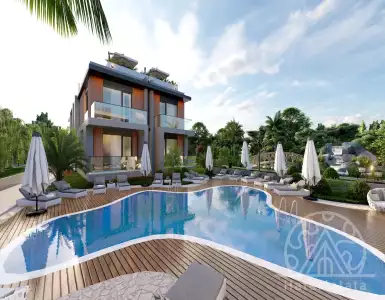
Flat for sale , Cyprus 126 672 $
The new residential complex is located in the foothills of Alsanjak. The complex consists of two two-storey buildings. Block A - 12...
For Sale Real Estate in Paris Île-de-France
Didnt find the right facility?
Leave a request - we will handle the selection and send the best offers in a short period of time



Irina Nikolaeva
Sales Director, HataMatata
Selection real estate in Paris Île-de-France in 15 minutes
Leave a request and we will select the 3 best options for your budget
🇫🇷 Acheter un bien immobilier à Paris et en Île-de-France : prix, quartiers, formalités
Paris Île-de-France is one of the world’s most liquid and visible real estate markets, combining a dense historic core, extensive suburbs and major infrastructure projects that reshape value corridors across the region. Whether you are a private buyer looking for a pied‑à‑terre in Saint‑Germain, an international investor targeting yield in Seine‑Saint‑Denis, or a family relocating to Versailles, the choices are specific, transparent and governed by clear French legal processes. This text walks through geography, transport, prices, developers, financing and legal realities so you can evaluate property in Paris Île-de-France with confidence.
🌍 Geography, transport and infrastructure in Paris Île-de-France
Paris Île-de-France covers the city of Paris and eight surrounding departments with a population of about 12.2 million residents, concentrated in a metropolitan ring served by an extensive rail and road network. The region is defined by the Paris ring roads, radial autoroutes (A1, A6, A10) and major waterways like the Seine that remain important for logistics and urban renewal projects in places such as Seine-Saint-Denis and Val-de-Marne.
Paris central arrondissements are served by 16 Métro lines, and the RER network (A, B, C, D, E) connects suburbs to central business districts with frequent peak services on lines like RER A, one of Europe’s busiest.
The Grand Paris Express, a major new automated metro network, is adding 200 km of new lines and 68 new stations, changing travel times and increasing development potential in suburbs from Saint‑Denis to Nanterre and Marne‑la‑Vallée.
💼 Economy and investment potential in Paris Île-de-France
Paris Île-de-France is France’s economic engine and one of Europe’s largest regional economies with GDP in the order of around €780 billion, contributing roughly one‑third of national output. The region hosts global headquarters, finance, tech clusters and major international institutions; La Défense alone houses over 150,000 employees in an office stock of about 3.4 million sqm.
Tourism remains a major demand driver with Paris drawing tens of millions of visitors annually, supporting short‑stay accommodation, retail and services near central arrondissements, the Marais, Montmartre and major museums such as the Louvre and Musée d’Orsay.
Labour market and higher education strengths amplify long‑term demand: the region concentrates leading universities and grandes écoles—Sorbonne, Université Paris‑Saclay, HEC, Sciences Po and École Polytechnique—creating a steady inflow of students and young professionals who fuel rental markets.
💶 Property prices in Paris Île-de-France
Central Paris and inner suburbs are among Europe’s most expensive residential markets, but prices vary strongly by arrondissement and suburb depending on supply, transport links and building typology.
- Central Paris (1st–8th, 6th, 7th): €13,000–€22,000 per sqm, small studios 18–30 sqm common, prime apartments 80–300 sqm.
- Inner arrondissements (9th–11th, 12th–15th): €10,000–€14,000 per sqm depending on condition and street.
- Hauts‑de‑Seine (Neuilly, Boulogne, Levallois): €6,500–€12,000 per sqm for family flats and townhouses.
- Versailles and western suburbs: €5,500–€8,000 per sqm for historic homes and garden properties.
- Inner ring emerging areas (Saint‑Denis, Montreuil, Ivry): €3,000–€6,000 per sqm with higher rental yields.
- Outer suburbs (Seine‑et‑Marne, Val‑d’Oise): €2,500–€5,000 per sqm for larger family homes and new build estates.
Market dynamics show constrained supply in central Paris with short time‑on‑market and relatively low gross yields (typically 2–3% gross in prime arrondissements), while inner and outer suburbs can deliver 3–6% gross depending on the micro‑location and tenant profile.
🎯 Best areas and districts in Paris Île-de-France to buy property
Paris arrondissements with historical and long‑term value resilience include the 6th (Saint‑Germain), 7th (Invalides), 8th (Champs‑Élysées), 4th (Le Marais) and parts of the 1st and 2nd for luxury and low volatility.
Outer but high-demand suburbs include Neuilly‑sur‑Seine, Boulogne‑Billancourt, Levallois‑Perret, Issy‑les‑Moulineaux—areas prized by executives for proximity to La Défense, Paris intra‑muros and international schools.
Transit‑driven opportunity corridors where Grand Paris Express stations are boosting prices include Saint‑Denis (Plaine Commune), Nanterre, Clichy‑Batignolles and Massy‑Palaiseau, plus new nodes around Noisy‑Champs and Villejuif, where development pipelines and jobs are increasing rental demand.
🏗️ Developers and major projects in Paris Île-de-France
Large French developers and institutional builders dominate new‑build supply in the region: Bouygues Immobilier, Nexity, Icade, Vinci Immobilier, Kaufman & Broad, Altarea, Eiffage Immobilier. These groups operate across new residential, office conversions and mixed‑use regeneration.
Signature urban regeneration projects that shape local markets include Clichy‑Batignolles (new housing, courthouse, parks), Paris Rive Gauche (13th arrondissement mixed‑use), and the Olympic legacy conversions in Saint‑Denis and Seine‑Saint‑Denis, transforming athlete villages into residential districts.
Developers commonly offer off‑plan (VEFA) new builds with staged payments tied to construction milestones and sometimes interest‑free installment plans during construction; these offers are standard in larger projects and flexible for foreign buyers working with international desks at major groups.
🏦 Mortgages and installment plans for property in Paris Île-de-France
French banks commonly finance purchases by non‑residents, with typical loan‑to‑value between 60–80% of the purchase price for foreign buyers, with some lenders extending up to 85% to established EU residents.
Down payments for non‑resident investors are commonly 20–30% of the purchase price plus acquisition costs; mortgage terms generally stretch up to 20–25 years for residential purchases, occasionally longer for repayment capacity and borrower age considerations.
Developers selling new build property in Paris Île‑de‑France frequently provide staged payment schedules (VEFA) and interest‑free installment plans between reservation and handover, while some banks offer financing on new‑builds that aligns with those developer schedules to reduce initial cash outflow.
📝 How to buy property in Paris Île-de-France: purchase process
The standard process begins with a reservation (optional pre‑contract) followed by a signed compromis de vente or promesse de vente, at which point a deposit—often 5–10% of the price—is paid into escrow.
Buyers then have a legal cooling‑off period (10 days for private buyers) after signing, during which the sale can be annulled. The sale completes at a notaire with the authentic deed (acte authentique) and payment of remaining balance and acquisition taxes; transfer is registered by the notaire.
Typical acquisition costs vary by property type: for secondary market property in Paris Île-de-France expected notary and registration fees around ~7–8% of purchase price, and for new build property in Paris Île-de-France reduced taxes and fees around 2–3%, plus developer warranties such as the ten‑year building guarantee.
📜 Legal aspects, residence permit and citizenship related to property in Paris Île-de-France
Purchasing property in Paris Île-de‑France does not automatically create a residence permit or a path to citizenship; French immigration law does not offer a straightforward “golden visa” based solely on real estate purchase.
Foreign buyers can live in France using appropriate visas—long‑stay visitor visas, talent visas tied to business activity, or work permits—and after sustained legal residence they may apply for naturalization, which normally requires continuous residency and language integration.
Property can support applications for certain residence categories indirectly (evidence of accommodation and means), but statements about residence permit through property purchase in Paris Île-de-France or citizenship by real estate investment in Paris Île-de-France should be treated cautiously and verified with immigration counsel.
🔍 Real estate investment in Paris Île-de-France: who it suits and scenarios
Buyers seeking capital preservation and long‑term appreciation gravitate to central arrondissements, classical Haussmann apartments and well‑maintained townhouses in the west; these are suited to high‑net‑worth individuals prioritizing capital security and legacy housing.
Investors targeting rental income or higher yields often look to inner suburbs and regeneration zones—Saint‑Denis, Clichy, Pantin, Montreuil—where yields of 3–6% are achievable and where tenant demand from students, professionals and families is strong.
Short‑term rental or tourism investment is concentrated in the 1st–4th, Montmartre and riverside quarters, but local regulations and Paris municipal restrictions limit tourist rentals in many areas; buyers should evaluate licensing and occupancy rules before acquiring.
- Typical buyer scenarios and recommended property types:
- Living/relocation: 2‑3 bedroom apartment in 15th, 16th, Boulogne for families.
- Long‑term rental income: new build one‑ to three‑bed flats near RER stations in Nanterre, Massy or Créteil.
- Short‑term investment: central pied‑à‑terre studios near Louvre/Marais with licensing checks.
- Premium segment: Haussmannian flats, townhouses in 6th/7th, private gardens in Neuilly.
- Second home / seasonal living: Versailles, Fontainebleau, Marne‑la‑Vallée chalets or village houses.
Whether you are reviewing an off‑plan purchase from a major developer, comparing yields across Seine‑Saint‑Denis and Hauts‑de‑Seine, or arranging a mortgage as a non‑resident, the region’s combination of transport upgrades, strong educational hubs and sustained tourism makes it a diversified market with options for conservative owners and opportunistic investors alike. If you want a focused brief on a particular arrondissement, a comparative yield table for target suburbs, or a checklist for approaching French banks as a foreign buyer, I can prepare tailored materials and step‑by‑step templates for offers, financing and notary coordination.
Frequently Asked Questions
Central Paris prices are high: roughly $11,000–$17,000/m² (€10,000–€15,000/m²). Inner suburbs average $4,500–$8,000/m² (€4,000–€7,000/m²); outer commuter towns $2,200–$4,800/m² (€2,000–€4,400/m²). Typical apartment prices vary by arrondissement, quality and transport links. Expect higher premiums near major stations and top schools.
Yes. Foreigners can buy real estate without nationality restrictions. There’s no automatic residency from purchase. Expect ID, proof of funds, and notary checks. Financing is available but banks may require larger down-payments for non-residents (often 20–40%). VAT and local taxes still apply.
Strong rental demand but mixed yields: prime central yields ~2–3% net; inner suburbs 3–5%; outer locations and student rentals 4–7%. Liquidity is high in Paris center; lower but steady in well-connected suburbs. Consider low vacancy, regulated rents, and high entry prices when calculating net returns.
Excellent public transport (metro, RER, regional trains), extensive healthcare, many public and international schools. Commutes vary 20–60+ minutes from suburbs. Green spaces and family services are common, but living costs (childcare, schooling extras) and apartment size are key trade-offs.
Yes—high-quality broadband and mobile in Paris and most suburbs, with wide fiber access in urban areas. Coworking and cafés are abundant; short- or long-stays are easy to arrange. Note visa rules for long stays: tourist stays are limited for some nationalities and buying property doesn’t grant residency.
No automatic golden visa for property purchases. Residency requires the appropriate long-stay visa, work permit, or other legal channels. Naturalization generally needs ~5 years of legal residence. Investing may support business or talent visas, but ownership alone doesn’t confer legal stay.
Typical timeline: offer → preliminary contract → 2–3 months for notary checks, then completion. Transaction costs: existing homes ~7–8% of price (notary and transfer taxes); new builds ~2–3%. Capital gains tax can be ~19% + social charges up to ~17% (tapering exemptions over years). Budget for agency, renovation and annual property taxes.
Regulations are strict. In Paris proper, primary-residence short lets are often limited (commonly a 120-day cap) and registration with the town is required. Secondary homes face stricter municipal rules and may need change-of-use permissions. Non-compliance risks fines and enforced reversions.
Yes. Sellers must provide an energy performance certificate (DPE). Poor-rated properties may face rental limits and will likely need insulation, heating upgrades or windows. Minor renovations: $5k–$20k; major works (insulation, new heating): $20k–$80k+. Building permits are required for structural or external changes.
Yes. Professional property management is common for remote landlords. Full-service fees typically range 6–12% of monthly rent; let-only options are cheaper. Expect additional costs for routine maintenance, agency tenant-finding fees and legal compliance (registrations, taxes, safety certificates).
Properties by Region
Properties by Country
- Real estate in Bulgaria (11408)
- Real estate in Montenegro (5348)
- Real estate in Indonesia (2423)
- Real estate in Spain (2289)
- Real estate in Portugal (1975)
- Real estate in Italy (1897)
- Real estate in Turkey (1699)
- Real estate in Cyprus (1589)
- Real estate in Thailand (1565)
- Real estate in Croatia (1431)
- Real estate in Greece (1082)
- Real estate in USA (1013)
- Real estate in France (1006)
- Real estate in Georgia (519)
- Real estate in Serbia (328)
- Real estate in Slovenia (123)
- Real estate in Egypt (23)
Free real estate consultation in Paris Île-de-France
Don't know which area to choose in Paris Île-de-France? We will tell you in which areas it is better to live or invest, and show you the appropriate options.

Maria Guven
Head of Direct Sales Department
+90-507-705-8082