


Real Estate in Southern France

International Real Estate Consultant
Leave a request and our manager will contact you.
International Real Estate Consultant
 Irina Nikolaeva, Southern Europe Real Estate Expert
Updated:
Irina Nikolaeva, Southern Europe Real Estate Expert
Updated:
Real Estate in Southern France
International Real Estate Consultant
Leave a request and our manager will contact you.
International Real Estate Consultant
Selection real estate in Southern France in 15 minutes
Leave a request and we will select the 3 best options for your budget



Weather in Southern France
 !
!
For sale Flat, Spain 203 748 $
📌 A few apartments for sale in Cala de Finestrat - a cozy place between Benidorm and Vieijahoyosa with a...
 !
!
Buy flat, Turkey 161 207 $
ID AN 24382 Main Features: Location:Antalya District:Altintaş Type of property: Housing under construction Number of rooms: 1+1, 2+1
For Sale Real Estate in Southern France
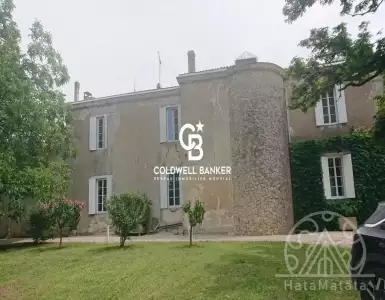
Houses in Bordeaux



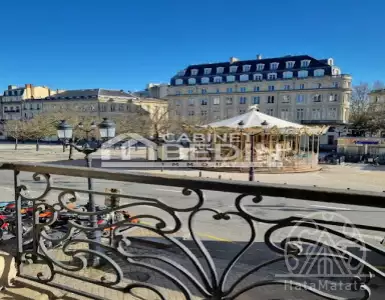
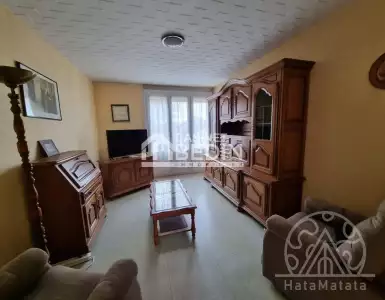
Flats in Bordeaux
Do you want to buy real estate in Southern France? We'll tell you where to start
Leave a request and we will select the 3 best options for your budget
International Real Estate Consultant
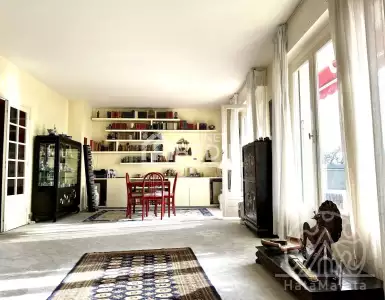
Flats in Toulouse
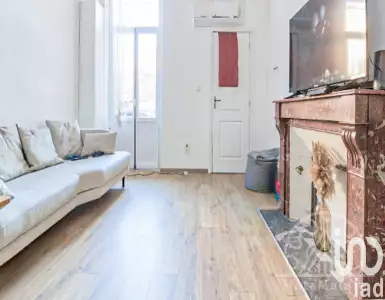
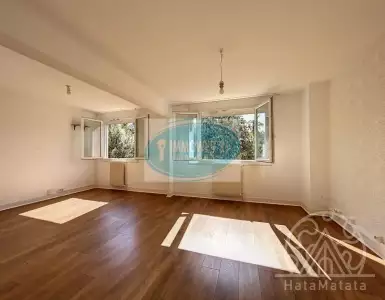
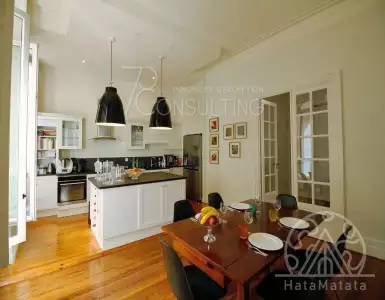
Selection real estate in Southern France in 15 minutes
Leave a request and we will select the 3 best options for your budget
 Legal review:
Deni Gerikhanov, International Real Estate Lawyer
Legal review:
Deni Gerikhanov, International Real Estate Lawyer
 Financial review:
Evgeniya Skripko, Financial Expert in International Real Estate
Reviewed:
Financial review:
Evgeniya Skripko, Financial Expert in International Real Estate
Reviewed:
🇫🇷 Southern France real estate: property prices, popular towns, buyer requirements
Southern France offers a rare combination of Mediterranean light, efficient infrastructure and diversified property supply that attracts private buyers, families, retirees and international investors alike. Locations from Nice and Cannes along the Côte d’Azur to Montpellier, Aix-en-Provence, Marseille and the Languedoc offer a spectrum of prices and yields, supported by major airports, high‑speed rail, top universities and established business districts. The practical realities of buying property in Southern France — from local market dynamics to mortgage terms for foreigners — reward buyers who combine clear objectives with local expertise.
💶 Property prices in Southern France
Property in Southern France ranges from compact seaside studios to luxury villas on private peninsulas, and prices reflect that breadth. In the urban core of the French Riviera, average asking prices often sit significantly higher than inland Provençal towns.
- Côte d’Azur (Nice, Cannes, Antibes): €5,000–€12,000 per m² for mainstream apartments; prime locations such as Cap-Ferrat or Saint-Jean-Cap-Ferrat can exceed €20,000 per m².
- Aix-en-Provence and coastal Var (Toulon, Hyères): €3,500–€7,500 per m² depending on proximity to sea and historic centre.
- Marseille: citywide averages around €3,200–€4,200 per m², with Vieux-Port and Prado commanding higher values.
- Occitanie (Montpellier, Nîmes, Perpignan): €1,800–€4,500 per m²; Montpellier’s Port Marianne and Antigone are pricier segments.
Secondary market property in Southern France typically carries higher notary fees and transfer costs (around 7–8% of price), while new build property in Southern France (VEFA) will have lower notary charges (about 2–3%). Yields vary by segment: long‑term rental yields are commonly 2–4% gross in prime Côte d’Azur locations, 3–5% in Marseille, and 4–6% in student/mid‑range markets such as Montpellier and Toulouse. Holiday rental yields can move into the 5–8% bracket across popular coastal towns during high season.
🚉 Geography, climate and transport accessibility in Southern France
Southern France stretches from the Italian border along the Mediterranean coastline through Provence to the Spanish frontier, encompassing regions such as Provence-Alpes-Côte d’Azur and Occitanie. The climate is Mediterranean: hot, dry summers and mild, wet winters along the coast, with continental and alpine variations inland.
- Air: Nice Côte d’Azur Airport handles around 13 million passengers annually, Marseille Provence Airport around 8–10 million, and Montpellier and Toulouse operate regional to intercontinental connections.
- Rail: Multiple TGV lines link Southern France to Paris in roughly 3 hours from Marseille and Aix‑en‑Provence, and under 4 hours from Nice via connections; Avignon TGV and Marseille Saint‑Charles are major hubs.
- Road and ports: Motorways (A7, A8, A9) and deep‑water ports (Marseille, Nice/Antibes marinas) support freight, yacht traffic and private logistics.
Southern France’s transport network supports commuter flows and tourism volumes, making properties near a TGV station or airport particularly liquid and attractive for both holiday rental and relocation buyers.
🏥 Infrastructure, education and healthcare in Southern France
Southern France combines strong public and private services with internationally recognised educational institutions and medical centres that matter to international buyers and families. Aix‑Marseille University and the University of Montpellier together serve hundreds of thousands of students in the region, while specialized institutions such as SKEMA and EDHEC have campuses in Nice and Lille respectively, feeding local demand for rental housing.
- Hospitals: CHU de Montpellier, Assistance Publique – Hôpitaux de Marseille and CHU Nice are major regional hospital centres, providing advanced care and emergency services.
- Schools: International schools (Lycée International de Valbonne/Sophia Antipolis, International School of Nice) and bilingual primary schools are widespread along the coast and in larger hinterland towns.
- Business districts: Sophia Antipolis near Nice is Europe’s oldest tech park with thousands of companies; Euroméditerranée in Marseille is a large urban redevelopment hosting offices, hotels and cultural venues.
These practical infrastructures — strong hospitals, universities, and business parks — underpin steady rental demand from students, healthcare workers and tech professionals, supporting rental income and capital stability.
📈 Economy and investment potential in Southern France
Southern France’s economy is diverse: tourism dominates coastal areas, technology clusters thrive inland, and agriculture and wine production remain important in rural Provençal and Languedoc zones. Regional employment patterns and tourism flows directly influence real estate returns.
- Tourism: The French Riviera and Provence receive over 10 million visitors annually, with spikes during festivals such as Cannes Film Festival and events in Nice and Monaco‑adjacent areas.
- Employment and GDP: Provence‑Alpes‑Côte d’Azur and Occitanie host strong services, tech and logistics sectors, with regional GDPs in the tens of billions of euros and consistent inward migration to urban centres like Montpellier and Toulouse.
- Demand drivers: Domestic buyers from Île‑de‑France, retirees from Northern Europe, and international second‑home buyers (UK, Italy, Belgium, Scandinavia) create a balanced demand mix for new build property in Southern France and secondary market property in Southern France.
Investment in Southern France benefits from a combination of tourism seasonality (high short‑term rental peaks) and stable long‑term demand from students and professionals, delivering both capital appreciation and diversified rental income streams.
📍 Best areas and key districts in Southern France to buy property
Practical choices depend on objectives: capital appreciation, rental yield, lifestyle, or low maintenance. Below are explicit districts and towns that match common purchase goals.
- Nice: Promenade des Anglais, Carré d’Or, Cimiez, Fabron — high liquidity and resale value.
- Cannes: La Croisette, Le Suquet, Palm Beach — strong short‑let market.
- Marseille: Vieux‑Port, Prado, Endoume, Castellane, Euroméditerranée — affordable core city options.
- Aix‑en‑Provence: Quartier Mazarin, Quartier des Facultés — family and university demand.
- Montpellier: Port Marianne, Antigone, Comédie — student and young professional rentals.
- Toulouse: Capitole, Saint‑Cyprien, Borderouge — aerospace cluster proximity.
- Languedoc and smaller towns: Arles, Avignon (Intra‑Muros), Nîmes, Perpignan — lower entry prices and steady long‑term demand.
These districts have distinct profiles: prime coastal addresses for capital growth, university neighbourhoods for stable yields, and redevelopment zones (Port Marianne, Euroméditerranée) for modern apartments and infrastructure uplift.
🏗️ Major developers and new build projects in Southern France
Large national developers are active across the region, offering new build property in Southern France under VEFA contracts with construction guarantees and warranty coverage. Key names include:
- Nexity — broad portfolio from Marseille to Montpellier, active in urban renewal and off‑plan apartments.
- Bouygues Immobilier — residential and mixed‑use programs in Montpellier, Aix and coastal areas.
- Vinci Immobilier — larger scale projects and eco‑districts, including segments in Nice and Marseille.
- Kaufman & Broad and Eiffage Immobilier — frequent partners on coastal and suburban developments.
Notable projects and zones to watch are Euroméditerranée in Marseille, Nice Méridia eco‑district, Port Marianne in Montpellier and new masterplans around Aix‑en‑Provence TGV stations. Developers often propose energy‑efficient standards (RT 2012, RE2020) and customized payment schedules for buyers.
💶 Mortgages and installment plans for property in Southern France
Foreign buyers can obtain a mortgage in France for foreigners with competitive terms, though conditions differ from resident borrowers. Typical parameters include:
- Down payment: foreign buyers should expect to provide 20–30% of the purchase price; banks sometimes accept 15% for strong profiles.
- Loan‑to‑value (LTV): commonly up to 70–80% for non‑residents, depending on nationality, income documentation and credit history.
- Rates and terms: fixed rates generally range around 2%–4.5% depending on term and market conditions; common amortization terms are 10–25 years.
- Installment plans: many developers offer interest‑free installment plans during construction for VEFA contracts, staged payments at foundation, shell, fit‑out and delivery. These plans reduce immediate financing needs and can be combined with a bank mortgage at completion.
Buyers should prepare full documentation (tax returns, bank statements, passport, proof of income) and consider opening a French bank account to streamline transfers and mortgage servicing.
⚖️ Property purchase process in Southern France
The purchase process in France is regulated and predictable, with standard forms and legal protections. Typical steps are:
- Selection and offer: Buyer identifies property, submits a written offer (offre d’achat); agent prepares or negotiates price and conditions.
- Pre‑contract (compromis de vente or promesse de vente): Buyer signs the compromise and usually deposits 10% of the price (held by notary or agent). A 10‑day cooling‑off period applies for non‑professionals.
- Due diligence and mortgage: Buyer secures mortgage approval; notary performs title search and checks for servitudes, co‑ownership rules and taxes.
- Completion (acte de vente): Final deed signed before a notary; full payment transferred and property registered — secondary market transfers typically complete in 2–3 months from compromise, VEFA completions follow construction schedules.
Payments use bank transfers and certified funds; notaries handle registration and ensure tax and stamp duties are paid. Buyers commonly retain a notaire and may use a local attorney for added protection when needed.
🛂 Legal aspects, residence permits and citizenship with property in Southern France
Purchasing property in Southern France does not automatically grant a residence permit or citizenship. French immigration rules separate property ownership from immigration status and naturalization.
- Residence permits: Long‑stay visas and residence permits are available through employment, family reunification, retired status or investor business projects — not simply through buying property. Owning property can support an application by demonstrating ties but is not a standalone route.
- Golden visa and citizenship: France does not offer a mainstream “golden visa” purely for real estate investment; citizenship by real estate investment in Southern France is not a valid or available pathway.
- Tax and legal compliance: Non‑residents pay local taxes (taxe foncière), may be subject to French capital gains rules on sale, and must comply with anti‑money laundering checks and KYC requirements during the purchase.
Buyers seeking residency should consult immigration specialists to align property purchase with eligible visa categories, such as entrepreneur or retiree permits, and understand tax residence consequences.
🎯 Investment advantages and buyer scenarios for real estate in Southern France
Southern France fits a wide range of buyer profiles with specific matchups between location and objective:
- Second‑home and vacation use: Côte d’Azur (Nice, Cannes, Antibes) and coastal Var suit buyers seeking high‑amenity seafront living and strong seasonal rental potential.
- Long‑term rental and students: Montpellier, Aix, Toulouse and Marseille are ideal for student housing and young professionals, delivering 4–6% gross yields in many segments.
- Buy‑to‑let holiday rentals: Towns like Saint‑Tropez outskirts, Cannes and Luberon villages give high summer income but require active management and compliance with local short‑stay regulations.
- Premium investment and capital growth: Prime addresses on the Riviera and historic quarters in Aix and Avignon typically offer lower yields but stronger capital appreciation and liquidity.
- Relocation and family purchase: Suburban Aix, coastal Nice suburbs and towns near major airports/TGV stations balance schools, healthcare and commuting ease.
Each scenario benefits from aligning property type (new build property in Southern France vs secondary market property in Southern France) with financing (installment plan or mortgage in France for foreigners) and local rental rules to maximize ROI.
Local market intelligence, clear objectives and a structured purchase process reduce risk and increase the chance of a successful outcome when you buy property in Southern France. Whether you are looking for a compact apartment in Montpellier for rental yield, a beachfront apartment in Nice for lifestyle and liquidity, or a villa in Provence for family living, Southern France offers specific, verifiable opportunities supported by airports, TGV links, universities and established developers.
Frequently Asked Questions
How much do property prices run in Southern France?
Prices vary widely: coastal hotspots (French Riviera) approx. $6,000–$15,000/m² (€5,500–€13,000/m²), regional cities $3,000–$6,500/m² (€2,750–€6,000/m²), rural inland €1,500–€4,000/m² (~$1,700–$4,500/m²). Small apartments under $150k possible inland; luxury villas can exceed several million USD on the coast.
Can foreigners buy property in Southern France?
Yes — there are no nationality restrictions: non-EU and EU buyers can purchase freehold. Expect ID, proof of funds, and bank/mortgage checks. Non-resident buyers face different tax filings and may need a French bank account for ongoing costs and taxes.
Is investing in Southern France property a good rental play?
Strong tourist demand on the coast and city centres; expected gross yields typically 2–6% annually, higher for seasonal holiday rentals but with variable occupancy. Urban buy-to-let in university or transport hubs is more liquid; rural properties can be harder to sell and let outside season.
What is daily life like if I relocate to Southern France?
Good infrastructure: regional airports, TGV links to Paris, public transport in cities. Healthcare is high-quality via public hospitals and GPs. International schools in bigger cities; local schools widespread. Expect slower pace inland, stronger services near cities and coast.
Is Southern France good for digital nomads or remote workers?
Yes — towns and cities widely have high-speed broadband and growing fiber coverage; co-working and cafés common in urban centres. Monthly internet costs often $25–$50. For long stays non-EU visitors need appropriate visa; seasonal rentals available for flexible stays.
Does buying property in Southern France give residency or a golden visa?
No: purchasing real estate alone does not grant French residency or a golden visa. Non-EU buyers must obtain long-stay/work/family visas or residency through employment or other qualifying routes. Citizenship typically requires several years of legal residence plus language/integration criteria.
What taxes and transaction costs will I pay buying here?
Notary and transfer taxes for existing homes typically ~7–8% of price; new builds lower, ~2–3%. Annual property tax (taxe foncière) and local residence tax (taxe d'habitation) vary. Capital gains tax and social contributions may apply on sale for non-residents. Expect mortgage fees, agency fees if applicable.
How long does a property purchase take and common pitfalls?
Typical timeline: offer to final deed 2–3 months, longer if mortgage required. Pitfalls: unclear co-ownership charges, heritage/building restrictions, poor energy performance (high heating costs), undisclosed structural or flood/fire risks. Always get a mandatory diagnostic pack and legal review.
Are short-term vacation rentals allowed in Southern France?
Short-term lets are allowed but regulated: many coastal and big-city councils require registration, occupancy limits, and sometimes tourist tax. Some towns limit or prohibit converting long-term housing into short-term rentals. Check local mairie rules before buying for holiday lets.
What are typical renovation costs for village homes in Southern France?
Renovation varies: basic cosmetic work $300–$800/m²; full structural/insulation/heating upgrades $800–$1,800+/m². Restoring listed/stone houses can cost more and needs permits. Factor in energy upgrades for DPE (energy certificate) compliance and possible asbestos/plumbing/electrical replacement.
Property by cities
Real estate types in Southern France
Real estate types by cities of Southern France
- Flats in Bordeaux (18)
- Flats in Toulouse (15)
Properties by Region
Properties by Country
- Real estate in Bulgaria (11423)
- Real estate in Montenegro (5418)
- Real estate in Spain (5202)
- Real estate in Turkey (2796)
- Real estate in Indonesia (2424)
- Real estate in Portugal (2037)
- Real estate in Croatia (1694)
- Real estate in Cyprus (1622)
- Real estate in Italy (1576)
- Real estate in Thailand (1565)
- Real estate in Greece (1120)
- Real estate in France (1070)
- Real estate in USA (732)
- Real estate in Georgia (507)
- Real estate in Serbia (251)
- Real estate in Slovenia (125)
- Real estate in Egypt (20)
Free real estate consultation in Southern France
Don't know which area to choose in Southern France? We will tell you in which areas it is better to live or invest, and show you the appropriate options.

Maria Guven
Head of Direct Sales Department
+90-507-705-8082