


Buyers Shrink Home Sizes as Cyprus VAT Overhaul and Build Costs Bite

Smaller homes, bigger problem: why buyers are moving down in Cyprus
Buyers in Cyprus are choosing smaller properties in response to a mix of higher building costs, expensive borrowing and a major change in VAT rules. If you follow the property in Cyprus market, this shift is no small trend; it affects planning, pricing and the viability of new developments.
The combination of tax reform and rising construction expenses has altered how people calculate affordability. Our analysis unpacks the legal change, the numbers behind the market reaction and practical steps for anyone planning to buy, build or invest in Cyprus real estate.
What changed in the VAT rules and why it matters
The VAT regime for primary residences in Cyprus was tightened in 2023. Prior to that, a reduced 5% VAT rate applied to the first 200 square metres of any primary residence, irrespective of the property's total value. That allowed owners of high-value villas to benefit from the reduced rate.
The 2023 law narrows that benefit in two ways:
- The 5% rate now applies only to the first 130 sq metres, and only if the property's value does not exceed €350,000.
- Properties between 131 and 190 sq metres and valued up to €475,000 fall under a tiered reduced VAT arrangement.
- Beyond those thresholds, the standard 19% VAT rate applies.
The legal change responded to a European Commission view that the previous application did not meet EU rules requiring such measures to have a social aim. In short, the old regime allowed high-value properties to get the same tax advantage as modest family homes.
Why buyers care
VAT is a direct cost on new builds and significant renovations. A move from 5% to 19% on the taxable portion of a project can add tens of thousands of euros to the total price. That change forces buyers and developers to rethink both size and specification: where once a larger footprint could be justified because of a low VAT segment, that calculus has shifted.
The transitional period: who still benefits from the old rules
To soften the effect, parliament included a transitional provision that is now extended to the end of 2026. Under that rule, anyone who submitted a planning application between early June and 31 October 2023 continues to pay 5% VAT on the first 200 sq metres, regardless of when construction completes.
The data shows that many took advantage of the window. Since June 2023, about 9,000 taxpayers benefited from the old regime under the transitional provisions. Of these:
- 650 involved properties up to 200 sq metres but valued at more than €500,000.
- A further 300 were properties larger than 200 sq metres with values well above €500,000.
Between last year and the first four months of 2026, 4,555 taxpayers paid VAT under the old framework while 3,902 fell under the new one. The published figures also show that if the state had charged 19% VAT across all these transactions, it would have collected €360 million more in revenue.
What this transitional data tells us
- Developers and high-value buyers rushed to lodge planning applications in the qualifying window.
- The temporary parallel systems have distorted short-term market behaviour but are scheduled to end in 2026, after which the new thresholds will apply fully.
The hard numbers on space and cost
Since the new law took effect, the average floor area of primary residences and apartments that obtained planning permission and qualified for the 5% VAT has been 100 sq metres. That is a sharp contraction from the earlier norm where families and buyers might have planned larger homes knowing the first 200 sq metres attracted the reduced rate.
Construction costs have risen in parallel. Official figures show:
- In 2023 the average construction cost was €1,145 per sq metre (houses €1,214/sq m; apartments €1,075/sq m).
- In 2024 the overall average rose to €1,204 per sq metre (houses €1,328/sq m; apartments €1,082/sq m).
- Industry professionals put the 2025 average at €1,700 per sq metre, with figures reaching €2,500 per sq metre depending on materials.
These numbers matter because VAT applies on top of construction cost when relevant, and higher baseline build costs raise the absolute VAT paid even where the rate is reduced. A modest apartment of 100 sq m built at €1,700/sq m implies a construction bill of €170,000 before land, fees and finance—numbers that quickly shift affordability calculations when VAT and loan costs are added.
How the market is reacting: developers, buyers and pricing
The combined effect of VAT tightening and rising build costs is visible in three areas:
- Buyer preferences
- Developer product mix
- Pricing strategy
Buyers are shifting toward smaller units
Our reporting and the official planning data both show a clear trend: buyers target smaller primary residences that fall within the 130 sq m and €350,000 VAT thresholds, or they deliberately design units to take advantage of the transitional provisions. The average permitted size of 100 sq m for properties still getting 5% VAT underlines this.
Developers adjust product lines
Developers respond so long as margins allow.
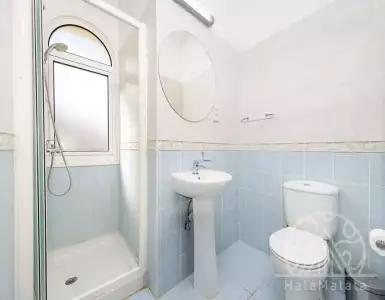
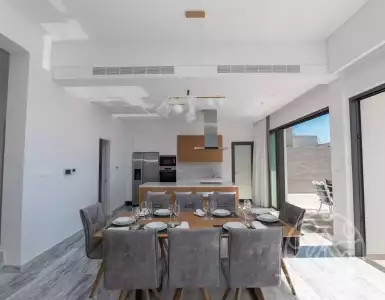

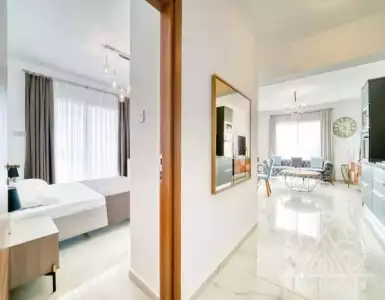


- More compact apartments and two-bedroom units positioned below the VAT and price thresholds.
- Package deals where finish levels are tailored to keep the total value under €350,000.
- A slowdown or re-pricing of large luxury projects where the VAT advantage disappeared for previously qualifying units.
Pricing and affordability
Rising construction costs shift where developers make money. When build costs are near €1,700–€2,500/sq m, margins pressure developers to charge higher sale prices, or shift to higher-spec developments that can justify elevated asking prices. That in turn pushes buyers into smaller footprints or forces them to accept lower specs.
Risks and unintended consequences
- The reduction in VAT benefits for high-end homes may slow new luxury construction and reduce speculative building, which can be welcome for fiscal discipline but may limit supply in certain segments.
- A run toward smaller units could create scarcity in medium-sized family homes, putting upward pressure on that segment's prices.
- Developers who misread demand may be left with unsold stock if they overbuild compact units in locations where buyers prefer space.
What this means for buyers, investors and expats
If you are buying property in Cyprus, or considering a development investment, several practical implications follow.
For owner-occupiers and families
- If you want to benefit from the reduced 5% VAT, target dwellings no larger than 130 sq m and priced under €350,000 (unless you qualify under the transitional window).
- Be realistic about finish levels. Developers may lower the finished specification to keep values under VAT thresholds, so budget for upgrades if you need higher-quality fittings.
- Consider resale. A compact apartment may be easier to sell in the short term, but long-term family demand could favour larger units.
For buyers planning to build
- Build costs have jumped. Use the latest per-square-metre figures when budgeting: official data for 2024 shows €1,204/sq m average, and industry estimates for 2025 place averages around €1,700/sq m.
- Factor VAT, local fees and higher borrowing costs into the total. Small changes in cost per square metre translate into large changes in the final bill.
- If you filed a planning application between early June and 31 October 2023, you may still be on the old VAT rules; confirm this with your architect or lawyer.
For investors and developers
- Reassess unit mix. The market now rewards efficient, smaller units in many locations, but location matters: tourist or luxury markets will behave differently from family-dominant suburbs.
- Model scenarios with and without the 5% VAT on the first 130 sq m to test viability.
- Monitor the end of the transition at the end of 2026; applications submitted during the qualifying window will still benefit from the old regime, creating a multi-year overlay of different tax treatments in the same market.
Policy rationale and fiscal impact
The government tightened VAT rules because EU guidance requires reduced VAT to support social objectives, not to subsidise luxury homes. That rationale sits alongside a revenue consideration: had the state applied 19% VAT across all transactions recorded after the change, it would have collected €360 million more on those transactions.
The transitional period was a political decision to avoid sudden market shock, and about 9,000 taxpayers used it. Those figures underline how tax policy interacts with planning behaviour: deadlines encourage a rush to file applications and reshape short-term supply.
How to assess a purchase now: a checklist
Before you sign any contract, run through this checklist:
- Confirm the VAT regime that will apply to your purchase based on planning application date and project value.
- Obtain up-to-date construction cost estimates per sq metre from at least two contractors.
- Calculate total cost including land, fees, finance, VAT and contingencies of at least 10% for unforeseen price increases.
- Run mortgage affordability scenarios reflecting current borrowing rates and stress-test for a 1–2 percentage point rise in rates.
- Consider resale demand for the unit size you plan to buy: smaller units may sell faster in the current market, but future family demand could favour larger dwellings.
Frequently Asked Questions
Q: What are the current VAT thresholds for primary residences in Cyprus?
A: The 5% VAT applies to the first 130 sq metres for properties valued up to €350,000. A reduced tier applies for 131–190 sq metres up to €475,000, and 19% VAT applies beyond those boundaries.
Q: Who still benefits from the old 5% on 200 sq m rule?
A: Property projects with planning applications submitted between early June and 31 October 2023 remain eligible for the old regime during the transition period that runs until the end of 2026. Check with your architect or legal adviser to confirm qualification.
Q: How much has construction cost risen?
A: Official data shows average construction cost at €1,145/sq m in 2023, rising to €1,204/sq m in 2024. Industry professionals estimate €1,700/sq m on average in 2025, with some projects reaching €2,500/sq m depending on materials.
Q: What practical steps should buyers take now?
A: Buyers should ensure VAT treatment is clear, use current construction cost metrics in budgets, and consider smaller unit sizes if affordability is the priority. Investors must re-evaluate yields if VAT and build costs erode margins.
Bottom line
The change in VAT rules, combined with rising building costs, has pushed the average permitted primary residence benefiting from 5% VAT down to 100 sq metres. For anyone buying or building in Cyprus today, the practical takeaway is simple: calculate costs per square metre realistically and design projects to match the VAT and price thresholds if those figures matter to your budget. If you want the low VAT benefit, aim for an apartment under 130 sq m and below €350,000, or confirm transitional eligibility if your planning application was lodged in the qualifying window.
We will find property in Cyprus for you
- 🔸 Reliable new buildings and ready-made apartments
- 🔸 Without commissions and intermediaries
- 🔸 Online display and remote transaction

International Real Estate Consultant

Subscribe to the newsletter from Hatamatata.com!
Subscribe to the newsletter from Hatamatata.com!
Popular Posts

We will find property in Cyprus for you
- 🔸 Reliable new buildings and ready-made apartments
- 🔸 Without commissions and intermediaries
- 🔸 Online display and remote transaction
International Real Estate Consultant

Subscribe to the newsletter from Hatamatata.com!
Subscribe to the newsletter from Hatamatata.com!
I agree to the processing of personal data and confidentiality rules of HatamatataPopular Offers
 1
1
 0
0
 2
2
80
2
2
80
 4
4
166
4
4
166
Need advice on your situation?
Get a free consultation on purchasing real estate overseas. We’ll discuss your goals, suggest the best strategies and countries, and explain how to complete the purchase step by step. You’ll get clear answers to all your questions about buying, investing, and relocating abroad.



Sales Director, HataMatata