 1 106 992 $
Flat with 3 bedrooms in Madrid, Spain
Bedrooms: 3 Bathrooms: 3
Madrid, Spain
Explore our property catalogue in Spain for endless opportunities. Enjoy sunny weather, beautiful beaches, and a low cost of living. Invest in your dream lifestyle today!
 Irina Nikolaeva, Southern Europe Real Estate Expert
Updated:
1 106 992 $
Madrid, Spain
 763 481 $
Madrid, Spain
 940 777 $
Madrid, Spain
 201 674 $
Barcelona, Spain
 Mountain View view 146 269 $
Barcelona, Spain
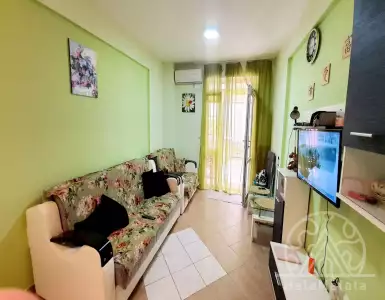 65 377 $
Barcelona, Spain
Save time — for free we will select objects for your budget and goals
 4 066 727 $
Marbella, Spain
 310 311 $
Estepona, Spain
 440 078 $
Estepona, Spain
 176 187 $
Tenerife, Spain
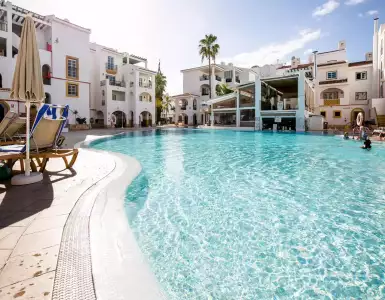 258 187 $
Tenerife, Spain
 263 727 $
Tenerife, Spain
 Mountain View view 331 321 $
Cartagena, Spain
 Sea View view 310 268 $
Kalp, Spain
 Sea View view 249 322 $
Benidorm, Spain
 Valencia and Murcia
1 624 listings
 Andalusia
375 listings
 Central and Northern Spain
161 listings
 Catalonia
89 listings
 Canary Islands
24 listings
 Legal review:
Deni Gerikhanov, International Real Estate Lawyer
 Financial review:
Evgeniya Skripko, Financial Expert in International Real Estate
Reviewed:
Spain remains one of the most practical and emotionally rewarding markets for buying a flat anywhere in Europe, combining warm climate, efficient transport and a diversified economy that supports both year‑round residents and seasonal visitors. The purchase process is accessible to foreigners with transparent legal steps, predictable taxes and a broad spectrum of product types from compact city studios to seafront penthouses on the Costa del Sol. For buyers focused on capital growth, rental income or lifestyle change, a well-targeted search in Spain can match objectives ranging from affordability to luxury, and the market includes clear price tiers and professional developers that streamline acquisition and after‑sales management.
Spain’s geography creates distinct demand corridors: Madrid as an inland business and transport hub, Barcelona as a Mediterranean metropolis, the Costa del Sol and Costa Blanca for sun‑seeker holiday rentals, and the Balearic and Canary Islands for luxury and second‑home markets. Buyers favor proximity to high‑speed AVE lines, international airports such as Adolfo Suárez Madrid–Barajas, Barcelona–El Prat and Málaga–Costa del Sol, and ports like Port of Valencia for connectivity and investment resilience.
Cities with good hospitals, international schools and business districts show stronger long‑term demand, which explains why areas like Valdebebas in Madrid, 22@ in Barcelona and Puerto Banús near Marbella are especially sought.
Urban micro‑factors—walkability, metro access, completed regeneration projects—directly shape prices and rentalability; a two‑bed flat steps up in value significantly when within a 10–15 minute walk of a mainline station or tram network.
Spain is one of the largest economies in the European Union with a diversified services base—tourism, finance, logistics and technology—that sustains property demand across regions. High inbound tourism volumes translate into robust short‑let markets in coastal zones and city centres, while domestic migration and remote‑work trends keep demand steady in mid‑sized cities.
Investment flows include both private buyers and institutional capital, with REITs and international funds active in logistics, residential build‑to‑rent and prime urban apartments, improving liquidity for sellers and buyers seeking exit options.
For investors looking at enduring fundamentals, the combination of transport upgrades, regional planning projects such as Madrid Nuevo Norte, and stable tourism corridors supports a measurable market depth and rent‑driven occupancy in city and coastal assets.
Spain offers a wide price spectrum from affordable inland apartments to high‑end coastal penthouses; prices below are indicative in US dollars and reflect typical offers across new developments and resale stock.
Buyer preferences concentrate around large urban centres and coastal resort belts where infrastructure, international connectivity and services are strongest. Madrid and Barcelona dominate corporate relocations and long‑term rentals; Málaga and Marbella lead coastal luxury and holiday segments; Valencia and Alicante combine affordability and strong rental seasons.
Spain’s residential sector is driven by nationally recognised developers and a mix of local builders executing large masterplans and boutique developers delivering high‑quality coastal units. Neinor Homes, Aedas Homes, Metrovacesa, Grupo Vía Célere, and Taylor Wimpey España are visible in major urban and suburban new builds, often offering warranties, energy efficiency standards and structured payment plans.
Flagship development areas include large regeneration projects such as Valdebebas (Madrid), 22@ (Barcelona), new marina and seafront renewals in Valencia and bespoke communities in Marbella Club Hills and Sotogrande on the Costa del Sol.
Buyers can choose from product formats: turnkey apartments in gated communities with pools and co‑working spaces, boutique city flats near transport nodes, and luxury penthouses with concierge services; developers commonly provide after‑sales management and rental facilitation for investors.
Banks in Spain commonly offer financing to non‑residents but with more conservative loan‑to‑value limits than for residents; typical lender practice is 60–70% LTV for non‑resident applicants depending on nationality, property type and credit profile. Mortgage products include fixed, variable and mixed rates with terms up to 25–30 years for qualified applicants, and Spanish banks require an NIE tax number, proof of income, bank statements and sometimes a local guarantor.
Developer financing and staged payment plans are widespread for off‑plan purchases: common structures include reservation deposit, 20–30% during construction and final balance on completion; these arrangements are marketed as alternatives for buyers seeking a flat in Spain with installment plan.
Buyers searching for flat in Spain with mortgage should budget for additional purchase costs (taxes, notary, registry, appraisal) equivalent to approximately 8–12% of purchase price on resale and lower VAT‑based costs on new builds; pre‑approval from a Spanish bank reduces execution risk and speeds up closing.
The Legal process to buy flat in Spain follows defined stages: reservation and private contract, due diligence and deposit, public notary signing, property registration and tax filings. The buyer typically secures an NIE, signs a reservation document, pays a deposit (commonly €6,000–€30,000 depending on price) and then executes a private purchase contract with a completion date.
Legal checks include verification of land registry entries, outstanding community fees, building licences and energy certificates; a qualified Spanish solicitor or gestor is essential to confirm clear title, absence of debts and correct urban classification. Final completion takes place before a notary who records the Escritura de Compraventa; the buyer then registers the title at the local Property Registry and pays applicable taxes.
Timeline from reservation to keys varies: resale can complete in 6–10 weeks after contract if financing is in place; off‑plan purchases follow the developer’s construction schedule, often 12–36 months, during which staged payments and developer guarantees are contractually regulated.
Property taxes for owners and buyers differ by transaction type and residency status, and clarity is essential for budgeting and tax compliance while assessing net returns. Property taxes in Spain for foreigners typically include: transfer tax (ITP) on resale ranging by region 6–11%, VAT (IVA) at 10% on new residential purchases plus stamp duty (AJD) around 0.5–1.5%, and annual municipal property tax (IBI) commonly 0.4–1.1% of cadastral value.
Rental income is taxed: non‑resident owners face a withholding tax that is commonly 19% for EU/EEA residents and 24% for others, while resident owners include rental income in progressive personal income tax. Local regulations govern short‑term holiday lets and registration requirements (tourist licence) in cities like Barcelona, Madrid and many Balearic municipalities; compliance is mandatory and can affect permitted use and earnings.
Purchasing a flat does not automatically grant nationality; specific investment routes do provide residency: a Residence permit through flat investment in Spain is possible under the Golden Visa regime for qualifying real‑estate investments, and the Golden visa through flat investment in Spain requires a minimum real‑estate investment threshold of €500,000 as part of the investment visa framework; citizenship requires continuous residency over longer statutory periods and additional conditions.
Buying a flat for full‑time relocation favors Madrid (business, schools, hospitals) and Barcelona (urban lifestyle, international schools), where 2–3 bedroom apartments in established neighbourhoods are typical purchases for families. Buyers seeking seasonal residence and short‑let income choose the Costa del Sol, Costa Blanca and Balearic Islands; these markets provide higher Rental yield for flat in Spain and strong tourist seasons supporting occupancy.
Investors targeting recurring returns evaluate local long‑term rental demand in university towns (Salamanca, Granada), logistics hubs (Valencia area) and buy‑to‑let friendly districts in Madrid and Barcelona; expected ROI on flat in Spain depends on purchase price, yield and management costs with gross rental yields commonly 3–6% in cities and 4–8% in tourist coastal spots.
Premium buyers searching for lifestyle and capital preservation favor luxury developments in Marbella, Ibiza, Palma de Mallorca or bespoke city penthouses in central Madrid; these assets often serve family use, second homes and discretionary portfolios where capital appreciation and lifestyle amenities are equally important.
Spain’s housing market prospects point to steady demand driven by strong tourism corridors, urbanisation trends and improved financing availability; buyers who align location, product type and exit strategy—whether seeking income, capital growth, lifestyle or residency—find a deep market with professional developers, transparent legal processes and diverse finance options that make purchasing a flat in Spain a pragmatic and strategic decision for both individual homeowners and institutional investors.
Yes. Spain allows EU and non-EU buyers to purchase flats with no general citizenship restrictions. You need an NIE tax ID, a Spanish bank account, and standard documentation. Some border, military or island zones have specific rules, but for most residential property there are no nationality-based bans.
Country-wide average resale prices typically fall around €1,900–€2,300/m². Central Madrid and Barcelona commonly range €4,000–€6,500/m². Popular coastal and island hotspots often sit between €2,500–€6,000/m², while inland and rural areas can be €900–€1,500/m².
Yes—property investment of at least €500,000 (total value across properties) can qualify for Spain's investment residence (Golden Visa). It grants a residence permit for the investor and close family, renewables (initial entry permit then multi-year renewals). Long-term residence can be sought after 5 years; citizenship eligibility follows standard 10-year residency rules.
Expect resale transfer tax of ~6–10% (regional), new-build VAT around 10% plus AJD 0.5–1.5%, notary/registry/legal fees ~0.5–1.5%. Annual property tax (IBI) is usually 0.4–1.1% of cadastral value. Capital gains tax on sale generally ranges roughly 19–26% depending on gain and residency; consult a tax adviser for specifics.
Average gross rental yields across Spain are commonly 3–5%. Urban centre long-lets often yield 3–4%; tourist and holiday hotspots can reach 5–8% gross with seasonal peaks. Short-term holiday rentals may boost returns but face stricter local regulations and higher turnover costs.
Resale purchases typically take 4–12 weeks from signed reservation to completion, depending on mortgage and checks. New builds depend on construction stage and contracts—completion can take 6–18 months. Administrative steps like obtaining an NIE or mortgage pre-approval add several weeks.
Yes. Spanish banks lend to non-residents but commonly at lower LTVs: about 50–70% of purchase price for non-residents, and up to 70–80% for residents. Terms often reach 20–30 years for residents, shorter for non-residents; lenders assess income, credit history, and property type.
Yes. Spain has an established land registry (Registro de la Propiedad) and notarial system that secures title transfers. Typical due diligence includes a 'nota simple', outstanding charges check, and energy certificate. Using a notary and legal review reduces risks and confirms clear title before completion.
Spain offers long-term advantages: EU market access, strong tourism, and infrastructure. Historically property has shown low-to-mid single-digit annual appreciation over long cycles, though markets are cyclical. Coastal and major-city assets often retain value better than remote stock. Diversify and plan 5–10+ year horizons.
Monthly living costs vary: single person outside major cities €900–1,500, in Madrid/Barcelona €1,500–2,500. A family typically budgets €2,500–4,500. Include utilities, community fees, IBI, health insurance or social security contributions. Initial relocation and registration steps usually complete within a few weeks to months.
Yes: 129 of 2 277 properties in Spain (6%) have a sea view or are within 1 km of the beach. The most affordable of them starts from 79 000 $. The closest one is 10 m from the beach. HataMatata catalog data as of November 14, 2026.
The most affordable listing in Spain starts from 64 000 $ right now, out of 2 277 properties in the catalog. Sort the catalog by price to see the cheapest first and compare them with nearby towns in the region. HataMatata catalog data as of November 14, 2026.
Yes: 262 of 2 277 properties in Spain (12%) have a pool, private or shared in the complex. The most affordable of them starts from 90 000 $. HataMatata catalog data as of November 14, 2026.
Leave a request and receive free advice on prices, taxes, residence permits and the real estate market in Spain.