 373 659 $
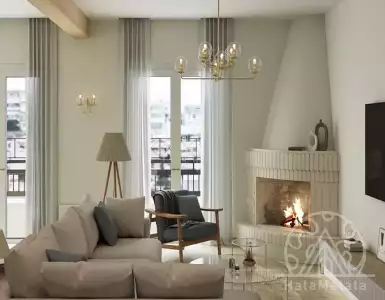
Penthouse with 2 bedrooms in Piraeus, Greece
Bedrooms: 2 Bathrooms: 2
Piraeus, Greece
Discover luxurious properties in Greece. Investment opportunities with stunning views and rich history. Embrace the Mediterranean lifestyle.
 Irina Nikolaeva, Southern Europe Real Estate Expert
Updated:
373 659 $
Piraeus, Greece
 1 483 649 $
Voula, Greece
 738 514 $
Glyfada, Greece
Save time — for free we will select objects for your budget and goals
 Legal review:
Deni Gerikhanov, International Real Estate Lawyer
 Financial review:
Evgeniya Skripko, Financial Expert in International Real Estate
Reviewed:
Buying a Penthouse in Greece opens access to Mediterranean light, villa-style terraces and strong tourism-driven demand across islands and mainland cities. Buyers face a market shaped by coastal appeal, transport nodes like Athens International Airport (Eleftherios Venizelos), major seaports such as Piraeus, and resort marinas in Mykonos (Tourlos Marina) and Porto Heli. Penthouses typically range from compact 80–120 m² urban units to expansive 200–400 m² rooftop residences with terraces; buyers should match size and exposure to intended use—year‑round living, holiday rental, or premium investment. The Greek penthouse market combines seasonal peak occupancy on islands with stabilizing long‑term demand in urban centers, which supports both capital growth and rental income.
Penthouses in Greece are driven by geography and climate: long coastlines, microclimates on islands, and concentrated urban nodes create distinct demand pockets. Coastal municipalities with sheltered bays, clear sea access and waterfront marinas consistently show higher pricing and seasonality in occupancy; mountain‑backed settlements and urban rooftops offer year‑round living appeal. Santorini, Mykonos, Vouliagmeni, Glyfada and Heraklion are among areas where micro-location defines both price per square meter and rental potential.
Transport infrastructure is a practical driver of buyer choice: international airports in Athens, Thessaloniki, Heraklion, and hub ferry services (Blue Star Ferries, Hellenic Seaways) shape accessibility for holiday rental guests and owners. Proximity to medical centers like Hygeia and international schools such as American Community School of Athens increases long‑term residential demand by families and expatriates. Urban penthouses near metro stops, suburban rail, and Attiki Odos receive steady long‑term rental interest, while island properties rely on seasonal ferry and air connections.
Local business and tourism centers determine liquidity: Athens’s financial and startup hubs and Thessaloniki’s logistcs and university base produce stable long-term tenancy; resort clusters in Cyclades and Crete generate high seasonal rentals. Buyers targeting capital appreciation prioritize redevelopment zones such as Ellinikon (The Ellinikon project) in Athens and resort masterplans like Costa Navarino, where infrastructure investment raises resale prospects.
Greece’s economy is service‑led with tourism as a major GDP component, producing robust seasonal demand for short‑term rentals and second‑home purchases. International tourism arrivals exceed 20 million in regular cycles, supporting strong occupancy in islands and coastal resorts and bolstering the case for an Investment penthouse in Greece for yield and capital gain. Business reorientation toward digital services and logistics also creates demand for premium urban housing.
Fiscal policy and tax structure influence investor returns and liquidity: Greece applies transfer taxes, annual property levies (ENFIA), VAT conditions on new builds, and income tax on rental revenue. International buyers must factor Property taxes in Greece for foreigners and local municipal levies into operating costs; these levies are comparable to resident obligations and affect net ROI. Investor confidence is influenced by structural reforms, EU funding for infrastructure and transparent land registry modernization which improves transactional certainty and resale liquidity.
Market transparency and tourism seasonality impact Rental yield for penthouse in Greece and ROI on penthouse in Greece: island luxury short‑let properties can achieve gross yields of 5–8% in peak seasons, while urban long‑term rentals typically yield 3–4% gross, with net returns dependent on tax and management costs. Liquidity is highest in Athens and top islands where international demand is consistent.
Penthouses vary widely in price by location, development class and size; typical floor area and terrace influence final pricing and operating costs. Urban penthouses in Athens command premium prices in southern suburbs and central districts, while islands hold the top end of the market for luxury and branded residences.
Market formats and sales dynamics:
Athens metropolitan area remains the largest single market by transactions and liquidity, with southern suburbs (Glyfada, Vouliagmeni) prized for beaches, marinas and international schools. Thessaloniki offers strong domestic rental demand tied to universities and industry, with lower entry prices for investors seeking yield. Cyclades islands, notably Mykonos and Santorini, lead in luxury seasonal rentals and brand value, attracting high net worth buyers and boutique hotel operators.
Other high‑demand regions:
Infrastructure and transport access for these regions:
The Greek market features a mix of local heavyweights and international resort developers offering penthouses in branded projects and standalone luxury buildings. Notable developers and projects include:
Advantages offered by leading developers:
Foreigners can access borrowing, subject to bank underwriting, appraisal and documentation. Greek banks and some international lenders provide financing with terms and conditions that vary by borrower nationality and property type. Typical conditions:
Common financing formats:
Developer installment plans may offer interest‑free construction stage payments or structured plans up to several years, especially in large masterplans. Buyers should compare combined cost of developer plans versus bank financing to optimize cash flow and tax treatment.
The Legal process to buy penthouse in Greece follows a structured path ensuring title transfer through a notary and registration in the Land Registry. Key steps:
Taxes, fees and administration:
Residence permit and citizenship context:
Penthouses suit a range of buyer goals: full‑time relocation, seasonal residence, short‑term rental investment, family living or premium lifestyle holdings. Specific matches include:
Typical property types by purpose:
Market prospects remain favorable as Greece continues to balance tourism demand with infrastructure upgrades and investment in major redevelopment zones. Demand for branded residences, resale penthouses in prime neighborhoods and turnkey units managed for rentals should maintain pricing support and liquidity across both islands and mainland cities, offering buyers diversified options for lifestyle use and financial return.
Penthouses in Greece vary widely: entry-level units in smaller towns or islands can range €120,000–€300,000; mid-market coastal and city penthouses €300,000–€800,000; prime locations (central Athens, Mykonos, Santorini) commonly €1,000,000–€10,000,000+. Prices depend on location, view, size and building quality.
Greece offers several long-stay routes: the investment residence permit (often called Golden Visa) can be obtained with real-estate investment from about €250,000; a digital nomad visa exists for remote workers with minimum income requirements (several thousand € monthly); work, student and family reunification permits also apply. Owning a penthouse can help meet investment criteria but does not automatically grant residency—applications and conditions must be met.
Typical purchase charges: transfer tax roughly ~3% on secondary-market sales or VAT (24%) on many new-build sales; notary, land registry and legal fees commonly ~1%–2% each; lawyer fees often 1%–2%. Annual property tax (ENFIA) and local municipal taxes also apply and vary by assessed value.
Yes. Greek banks and some foreign lenders offer mortgages to non-residents; loan-to-value (LTV) typically 50%–70% depending on buyer profile and property, with terms up to ~20–30 years. Lenders require proof of income, local bank account, tax ID and property valuation; conditions vary by bank and nationality.
Typical timelines run from 2 to 6 months from reservation to completion: due diligence and contracts (2–8 weeks), notarisation and transfer (2–12 weeks). Mortgages, title issues or planning approvals can extend this. Coastal islands or probate cases may take longer.
Ongoing costs include condominium/maintenance fees (€50–€500+/month depending on building), annual property tax (ENFIA, from a few hundred to several thousand €), utilities (€100–€400/month), insurance (€200–€1,000+/year) and occasional maintenance or refurbishment expense depending on property age and location.
Short-term rentals are common but regulated: hosts must register the property with tax authorities and local tourism platforms, collect tourist fees and comply with VAT/tax rules. Municipal restrictions or building rules can limit short lets in some areas, so check local rules and tax implications before renting.
Essential checks: verify title deeds and ownership, check for mortgages/encumbrances, confirm building permits and planning status, review cadastral records, obtain an Energy Performance Certificate, and secure tax clearance. Use a local lawyer to perform due diligence and register the sale properly.
Yes. Greece enforces seismic and building codes; any new construction or structural renovation requires planning permission and engineering approval. Older buildings may need retrofitting for seismic compliance. Check local municipality requirements and obtain certified engineering inspections before buying.
Greece offers a good quality of life with public and private healthcare accessible in cities, international or private schools in larger centers, and reliable urban transport; islands rely on ferries and regional flights. Cost of living is generally lower than many Western European countries (single adult typical monthly costs excluding rent ~€800–€1,500). Many areas have good internet and are suitable for digital nomads or remote workers.
The most affordable listing in Greece starts from 182 000 $ right now, out of 14 properties in the catalog. Sort the catalog by price to see the cheapest first and compare them with nearby towns in the region. HataMatata catalog data as of November 24, 2026.
Leave a request and receive free advice on prices, taxes, residence permits and the real estate market in Greece.
 Central Greece and the Peloponnese