Frequently Asked Questions
What are property prices in Val d'Isère?
Val d'Isère is a high-end ski market. Typical price ranges: studios/1‑bed $300K–$900K (€275K–€825K); 2–3 bed apartments $800K–$3.5M (€730K–€3.2M); luxury chalets $3M–$25M (€2.7M–€22.5M). Price per m² commonly ranges $15,000–$40,000/m² (€13,500–€36,000/m²) depending on proximity to slopes, views and renovation level. Expect premium for slope-side and large alpine chalets.
Can foreigners buy real estate in Val d'Isère?
Yes. France imposes no nationality restrictions—foreigners can buy freehold in Val d'Isère. Buying doesn’t grant residency or a visa. Non-resident owners pay local taxes and must register rental income in France. Use a French notary for legal transfer and check any municipal rules (e.g., short‑let registration). Consider tax filing obligations in both France and your home country.
Is investing in Val d'Isère property a good idea?
Investment is driven by strong seasonal demand: high winter occupancy and decent summer tourism. Gross yields are typically low—around 2–5%—because prices are high; net yields can be lower after fees. Liquidity is limited compared with big cities; prime assets sell slower but retain value. Short‑term rental income peaks in high season; success depends on location, property size and management.
How long does buying property in Val d'Isère take?
Typical timeline: offer to signed preliminary contract 1–4 weeks; 10‑day cooling period; final notary act and transfer 2–3 months after the preliminary contract. For off‑plan purchases timelines follow developer schedule and can be 12–36+ months to delivery. Allow extra time for mortgage approval (4–8 weeks) and due diligence (surveys, co‑ownership rules).
What taxes and transaction costs should I expect?
For existing homes: transfer and notary fees about 7–8% of purchase price. For new builds (VEFA) notary fees roughly 2–3%. Agency fees vary 3–6% if buyer pays. Annual costs: property tax (taxe foncière) and local tourist tax for short lets. Income from rentals taxed in France; non‑residents may face additional social contributions. Factor in maintenance, co‑ownership charges and insurance.
Which Val d'Isère areas are best for renting vs living?
Best for rental income: central slopeside zones and close to main lifts (easy guest access) and La Daille for budget-conscious skiers. Best for family living: Le Fornet and quieter upper village areas—more space, privacy and chalet options. Newer/resort-edge developments can attract longer-term tenants. Match area to goal: slope access and proximity to amenities for short‑lets; space and tranquility for full‑time living.
Are short-term rentals allowed in Val d'Isère?
Short‑term rentals are common but regulated. You must collect tourist tax, declare rental income and comply with municipal rules—some properties require registration or a change‑of‑use permit for commercial letting. Seasonality is strong: peak winter weeks and school holidays drive revenue. Always check the mairie for current local registration and any co‑ownership bylaws limiting short lets.
Is it safe to buy off-plan (new-build) in Val d'Isère?
Off‑plan (VEFA) is available and offers staged payments tied to construction phases. Buyer protections include a cooling period, a deposit cap, and statutory guarantees: a 10‑year structural warranty and a defects warranty. Risks: delivery delays, contractor insolvency and design changes. Mitigate risk via notary review, bank guarantees, clear contracts and independent technical advice.
Can I work remotely from Val d'Isère long-term?
Val d'Isère can suit remote work for long stays: village centers often have fiber or high‑speed VDSL with speeds commonly 50–500 Mbps; outlying chalets may be slower. Seasonal crowds affect connectivity and services. For extended stays, check accommodation for reliable power, heating and workspace. Visa rules: non‑EU nationals must respect Schengen 90/180‑day limits or obtain an appropriate French long‑stay visa.
What are healthcare, schools and transport like in Val d'Isère?
Healthcare: onsite medical centre, GPs and emergency care; nearest full hospital in Bourg‑Saint‑Maurice ~25–30 min by road. Schools: local primary and nursery available; limited English‑medium schooling—regional options further afield. Transport: nearest international airports (Geneva/Lyon) are ~2–3.5 hours’ drive; Bourg‑Saint‑Maurice train station ~20–30 min away with seasonal connections. Winter driving requires appropriate vehicle prep.
Is there property with a pool in Val d'Isère?
Yes: 1 of 1 property in Val d'Isère (100%) have a pool, private or shared in the complex. The most affordable of them starts from 823 000 $. HataMatata catalog data as of November 28, 2026.


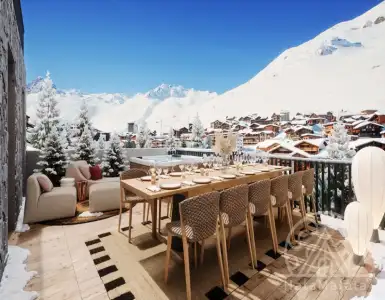 Mountain View view 823 124 $
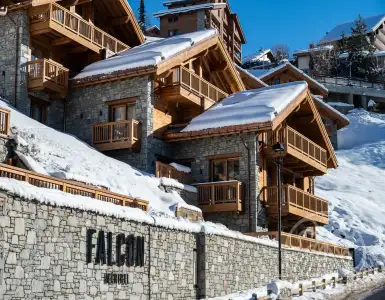
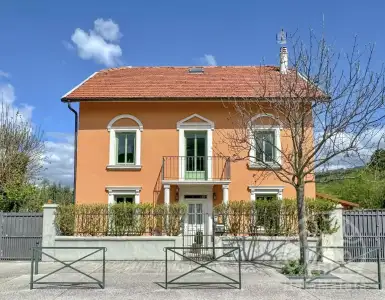 1 793 628 $
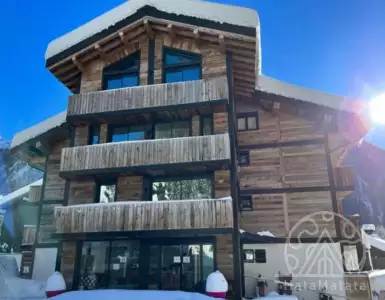 2 304 749 $
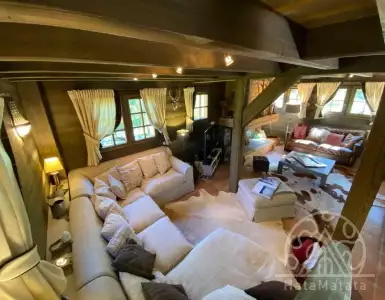 1 635 274 $
 9 657 996 $
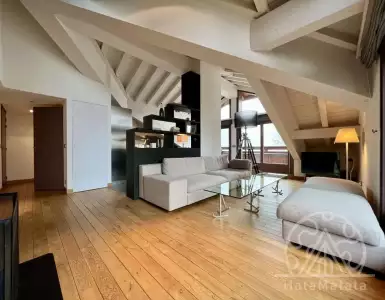 2 743 748 $
 Legal review:
Deni Gerikhanov, International Real Estate Lawyer
 Financial review:
Evgeniya Skripko, Financial Expert in International Real Estate
Reviewed: